Music

.

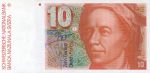
Leonhard Paul Euler (15 April 1707 – 18 September 1783) was a pioneering Swiss mathematician and physicist who spent most of his life in Russia and Germany.

800px-euler-10_swiss_franc_banknote_front

In 1739 he wrote the Tentamen novae theoriae musicae, hoping to eventually incorporate musical theory as part of mathematics. This part of his work, however, did not receive wide attention and was once described as too mathematical for musicians and too musical for mathematicians.

— Wikipedia

.

.

.

2009.08.26 Wednesday ACHK

開山祖師牛

.

.

They were in the wrong place at the wrong time. Naturally they became heroes.

— Star Wars

.

.

The first discoverer of a physical phenomenon had to face the most uncertain data.

— Kenneth Young, paraphrased by Me

開荒牛所面對的環境, 一定是荒地.

— Me

建路的人建路時, 沒有路行.

— Me

物理學的開山祖師, 自己一定沒有物理老師.

— Me

.

.

.

2009.08.25 Tuesday copyright ACHK

藉口

.

原因有時間性.

理由沒有時間性.

— Mr Lee

.

.

原因不等於理由.

cause \ne reason

原因沒有對錯.

原因和結果只是客觀描述事件發生的時間先後次序.

理由有對錯.

.

.

e.g.

救災不力的原因是事前不知道災難的嚴重性.

但這不是理由.

作為領袖, 有責任預計最壞的情況.

.

.

藉口是

把原因(cause)誤作為理由(reason).

.

— Me

.

.

.

2009.08.24 Monday \copyright ACHK

中道 2

.

The Buddha attacked all attempts to conceive of a fixed self, while stating that holding the view “I have no self” is also mistaken. This is an example of the middle way charted by the Buddha.

— Wikipedia

.

.

.

2009.08.23 Sunday ACHK

Three passions

.

.

Three passions, simple but overwhelmingly strong, have governed my life: the longing for love, the search for knowledge, and unbearable pity for the suffering of mankind. These passions, like great winds, have blown me hither and thither, in a wayward course, over a deep ocean of anguish, reaching to the very verge of despair.

— Bertrand Russell

.

.

.

2009.08.21 Friday ACHK

治未病 2

馬英九

.

.

作為一個領袖,

即使災難發生時的反應快,

還是不夠,

而應該是在災難發生就有反應.

要先知先覺, 洞悉先機.

For a real leader,

just react quickly is not good enough.

Instead, he should react before disasters happen.

In other words,

a short reaction time is not good enough.

Instead, he should have a negative reaction time.

He has to be ahead of his own time.

如果,

你的知識, 智力, 膽量 還未強到

彷彿可以接收未來訊息的話,

請不要做領袖.

.

— Me

.

.

.

2009.08.19 Wednesday copyright ACHK

Compensation (essay)

.

Compensation is an essay by Ralph Waldo Emerson. It appeared in his book, Essays, first published 1841. In 1844, Essays: Second Series was published, and subsequent republishings of Essays were renamed Essays: First Series.

In his essay, Emerson states that everything is well compensated for. Every excess causes a defect; every defect an excess. Every benefit has a tax, and correspondingly every tax has a benefit. The cheat cheats himself. The swindler swindles himself. The real prize of labor is knowledge and virtue. Wealth and credit are mere external signs. These signs, like paper money, may be counterfeited or stolen, but that which they represent, namely, knowledge and virtue, cannot be counterfeited or stolen.

Emerson also states that problems and obstacles are seeds of success. Our strength grows out of our weakness. A great man is always willing to be little. A person who is spoiled by successes and advantages, goes to sleep. When a person is pushed, tormented and defeated, he has a chance to learn something, he gains facts, learns his ignorance and real skill.

Emerson states that the belief that the good suffer and that justice is not done, is an immense fallacy. Nature guarantees that every contract must be paid. If you have an ungrateful master, serve him more. Lean to put God in your debt.

Emerson also mentions a mob mentality. According to him, a mob is a group of people deprived of reason and voluntarily descending to the nature of the Beast. Its fit hour of activity is night. Its actions are insane like its whole constitution. The martyr, a victim of the mob, cannot be dishonored. Every lash inflicted is a tongue of fame. Hours of sanity and consideration never fail to arrive to communities, as to individuals, and when the truth is seen, and the martyrs are justified.

— Wikipedia

.

.

.

2009.08.16 Sunday ACHK

軼聞

.

蔣經國當年在上海改革金圓券後來遇上阻力。蔣經國查封的其中一家公司為孔祥熙之子孔令侃所有。蔣經國因宋美齡的壓力而被迫放人,蔣本人亦因此事而辭職求去。因此在台灣,蔣經國時代來臨之後,蔣家後期的家族內鬥便從蔣經國和宋美齡的心結開始,對於孔家的成員表明一律拒絕往來,更不准孔家在官場上,牽涉所有官職與政治活動,直到蔣經國過世為止才結束。

–維基百科

.

.

.

2009.08.13 Thursday ACHK

Up

.

In June 2009, a 10-year-old girl from Huntington Beach, California was suffering from the final stages of terminal vascular cancer. It is reported her dying wish was to “live to see the movie” despite the advanced stage of her disease. However, due to her deteriorating condition, the girl was unable to leave the family home. As a result, a family friend contacted Pixar and arranged for a private screening. A Pixar employee flew to the Huntington Beach home with various Up tie-in toys and a DVD copy of the film. The child could not open her eyes due to the pain caused from the cancer, so her mother described the film to her scene by scene. The young girl died approximately seven hours after the screening ended.

.

— Wikipedia

.

.

.

2009.08.12 Wednesday ACHK

新亞書院

.

1976年,香港政府建議中大改制,將學科教學的工作統一歸由大學中央辦理,書院僅負責學生福利及通識教育等工作。新亞書院校董會九位董事,包括唐君毅、李祖法、錢穆、沈亦珍、吳俊升、徐季良、劉漢棟、任國榮、郭正達,以此違反中文大學之「聯邦制」本意為由,集體辭職抗議。

— 維基百科

.

.

.

2009.08.06 Thursday ACHK