Powers of Ten

The Powers of Ten films are two short American documentary films written and directed by Charles and Ray Eames. Both works depict the relative scale of the Universe according to an order of magnitude (or logarithmic scale) based on a factor of ten, first expanding out from the Earth until the entire universe is surveyed, then reducing inward until a single atom and its quarks are observed.

Related films

Cosmic Voyage (1996), a loose remake of Powers of Ten for the National Air and Space Museum of the Smithsonian Institution.

— Wikipedia on Powers of Ten

2014.03.22 Saturday ACHK

L.A. Noire

The case that makes you and the case that breaks you…

The one you never solve, the one that keeps you awake at night.

The case that gnaws at your guts and ruins your marriage.

The case that keeps you propping up a bar as you relive the what-ifs, the might-have-beens, the half-leads and half-truths.

The case that other cops murmur about whenever you walk past.

The case you never… ever… discuss.

— Herschel Biggs

— L.A. Noire

— Me@2014-03-17 05:27:25 PM

2014.03.19 Wednesday ACHK

Antichamber, 3

Gameplay/Plot

In Antichamber, the player controls the unnamed protagonist from a first-person perspective as they wander through non-Euclidean levels. Regarding typical notions of Euclidean space, Bruce has stated that “breaking down all those expectations and then remaking them is essentially the core mechanic of the game”.

— Wikipedia on Antichamber

2014.03.15 Saturday ACHK

Antichamber

The good part is that the game is a genre in itself. There are no similar games in this world.

The bad part is that a few levels, such as “Falling Forward” and “Laying the Foundation”, do not make any sense. They exist just for wasting the players’ time.

Whenever you get stuck, don’t try harder. Just consult a walkthrough.

— Me@2014-03-09 08:58:45 AM

2014.03.10 Monday (c) All rights reserved by ACHK

In Time

Plot

In 2169, people are born genetically engineered with a digital clock, bearing 1 year of time, on their forearm. When they turn 25, they stop aging, but their clock begins counting down; when it reaches zero, that person “times out” and dies instantly. Time on these clocks are the universal currency; by touching arms, one person can transfer it to another, or to/from a separate clock (a “time capsule”). The country is divided into “time zones” based on the wealth of its population. There are two main time zones: Dayton, which is poor, and New Greenwich, the wealthiest zone, where inhabitants are constantly surrounded by bodyguards.

— Wikipedia on In Time

2014.03.12 Wednesday ACHK

The Journey of Life

This is a logo owned by Alexander Bruce for Antichamber.

Antichamber (originally known as Hazard: The Journey of Life) is a single-player first-person puzzle-platform video game developed by Alexander Bruce. Many of the puzzles are based on phenomena that occur within the Non-Euclidean geometry created by the game engine, such as passages that lead the player to different locations depending on which way they face, and structures that seem otherwise impossible within normal three-dimensional space.

Author or copyright owner: Alexander Bruce

The game includes elements of psychological exploration through brief messages of advice to help the player figure out solutions to the puzzles as well as adages for real life. The game was released on Steam for Microsoft Windows on January 31, 2013, a version sold with the Humble Indie Bundle 11 in February 2014 added support for Linux and Mac OS X.

— Wikipedia on Antichamber

2014.03.05 Wednesday ACHK

千面英雄 3

這段改編自 2010 年 7 月 27 日的對話。

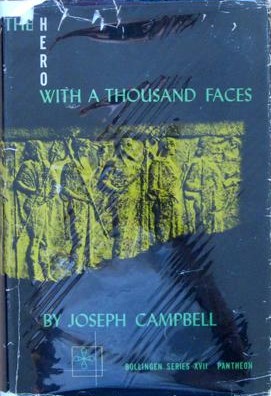
有一本書叫做《The Hero with a Thousand Faces》(千面英雄),是一位神話學家所著。他博覽古往今來,眾多的神話傳說,發覺它們背後,有一個共通的故事模式。

不知何故,故事中的英雄主角,會遇到一些特別奇幻的經歷,去了另一個世界,或者同一個世界的另一個境界,學了一些新的心靈功夫。由於境界的提高,自此以後,主角會看到平常人看不到的東西,感受到一般人接收不到的靈感。

但是,由於劇情需要,雖然主角很想留在新世界,他被打回凡間。回到地球後,主角就熱切傳播,他在另一個世界的新發現,希望世人之中,有人跟他分享。

這就是故事的格局。你想一想,就會發覺古往今來,很多英雄故事,都依據這個結構,例如耶穌和釋迦牟尼的故事。《星球大戰》的作者,也自稱受到《千面英雄》的啓發。

— Me@2013.12.10

2013.12.12 Thursday (c) All rights reserved by ACHK

Consciousness 2

So when we’re awake and conscious, a single shock initiates a series of responses. Because they are well-connected, the different parts of the cerebral cortex are able to communicate and the integration results in this being conscious.

But when we’re asleep and unconscious, the communication channels temporarily shut down. So the same shock produces only a short likewise response.

— The Secret You

— BBC Horizon Documentary

conscious

Etymology

From Latin conscius, itself from con– (a form of com– (“together”) + scire (“to know”).

— Wiktionary on conscious

Consciousness and self-awareness is due to the communications between different parts of the brain.

— Me@2013-06-06

2013.06.06 Thursday (c) All rights reserved by ACHK

The Theoretical Minimum

A number of years ago I became aware of the large number of physics enthusiasts out there who have no venue to learn modern physics and cosmology. Fat advanced textbooks are not suitable to people who have no teacher to ask questions of, and the popular literature does not go deeply enough to satisfy these curious people. So I started a series of courses on modern physics at Stanford University where I am a professor of physics. The courses are specifically aimed at people who know, or once knew, a bit of algebra and calculus, but are more or less beginners.

— Leonard Susskind 

2013.05.20 Monday ACHK

超人

惜此際 3.1

這段改編自 2010 年 4 月 3 日的對話。

我因為受過某些訓練,而成為了一個「不會自殺」的人。但是,我不會自殺,不代表我不會發瘋。所以,雖然我沒有需要防範自己自殺,但是我有需要防範自己發瘋。

當年我不幸選錯了某一份工作。我做了大概一個月後,就想辭職逃走。主要的原因是,那份工作的工作量極端超級,去到一個足以令我發瘋的程度。我已走到自己正常意志的邊緣。只差一步,就可以達到完全瘋狂的境界。

但是,因為某些緣故,我必須起碼做滿一年的時間,才可以離開。當時,我避免瘋狂的方法是,每日只擔心當日的事情;極力防止自己想像,超過一天的困難。

我不會想:「還有一年,怎樣捱得過呢?」

我只會想:「怎樣捱過這一天?」

每日的目標也只是,今天不要崩潰。

不少人也用這個「活在當下」方法,來完成地球人不可能完成的任務。作家 John T. Reed 在他的《Succeeding》中提到,年輕時,他在西點軍校接受軍訓,十分辛苦,因為長期缺乏睡眠和食物。辛苦的程度,令他連「一天」也接受不到。每一刻,他只會想像幾個小時的事情,例如:「只要捱過這兩個小時,就可以到達午飯時間。」

最極端的情況是,當他累到連最基本的步行也做不到時,他就會跟自己說:「我現在其實毋須『步行』。我需要做的,就只是把左腳放在右腳前,然後再將右腳放在左腳前,如此類推。」

— Me@2013.04.17

日日難過日日過

— Me@2009.03.27

2013.04.17 Wednesday (c) All rights reserved by ACHK

Hacker 3

.

The Jargon File has had a special role in acculturating hackers since its origins in the early 1970s. Many textbooks and some literary works shaped the academic hacker subculture; among the most influential are:

* Hackers: Heroes of the Computer Revolution, by Steven Levy
* Godel, Escher, Bach, by Douglas Hofstadter
* The Art of Computer Programming (TAOCP), by Donald Knuth
* The Mythical Man-Month, by Brooks
* Compilers: Principles, Techniques, and Tools (“the Dragon Book”), by Aho, Sethi, and Ullman
* Structure and Interpretation of Computer Programs (SICP), by Abelson and Sussman
* The C Programming Language (K&R), by Kernighan and Ritchie
* The Hitchhiker’s Guide to the Galaxy, by Douglas Adams
* The Tao of Programming, by Geoffrey James
* The Illuminatus! Trilogy, by Robert Shea and Robert Anton Wilson
* Principia Discordia, by Greg Hill and Kerry Thornley
* The Soul of a New Machine, by Tracy Kidder
* The Cuckoo’s Egg, by Cliff Stoll
* The Unix System, by Stephen R. Bourne
* Hackers & Painters, by Paul Graham
* The Cathedral and the Bazaar, by Eric S. Raymond
* The essays of Richard M. Stallman (many published in Free Software, Free Society: Select Essays of Richard M. Stallman)

– Wikipedia on Hacker (programmer subculture)

.

.

[10] “Hacker” here means a highly skilled programmer, not a computer criminal. — Me

The basic difference is this: hackers build things, crackers break them. — Eric S. Raymond

In academia, a “hacker” is a person who follows a spirit of playful cleverness and enjoys programming.

– Wikipedia on Hacker (academia)

.

.

.

2010.03.04 Thursday ACHK

The Feynman Lectures on Physics

This is a file from the Wikimedia Commons.

The Feynman Lectures on Physics is a 1964 physics textbook by Richard P. Feynman, Robert B. Leighton and Matthew Sands, based upon the lectures given by Feynman to undergraduate students at the California Institute of Technology (Caltech) in 1961–1963.

The Feynman Lectures are considered to be one of the best and most sophisticated college level introductions to physics. Feynman, himself, however, stated, in his original preface, that he was “pessimistic” with regard to the success with which he reached all of his students. The Feynman lectures were written “to maintain the interest of very enthusiastic and rather smart students coming out of high schools and into Caltech.” Feynman was targeting the lectures to students who, “at the end of two years of our previous course, [were] very discouraged because there were really very few grand, new, modern ideas presented to them.” As a result, some physics students find the lectures more valuable after they obtain a good grasp of physics by studying more traditional texts. Many professional physicists refer to the lectures at various points in their careers to refresh their minds with regard to basic principles.

As the two-year course (1961–1963) was still being completed, rumor of it spread throughout the physics community. In a special preface to the 1989 edition, David Goodstein and Gerry Neugebauer claim that as time went on, the attendance of registered students dropped sharply but was matched by a compensating increase in the number of faculty and graduate students. Sands, in his memoir accompanying the 2005 edition, contests this claim. Goodstein and Neugebauer also state that, “it was [Feynman’s] peers — scientists, physicists, and professors — who would be the main beneficiaries of his magnificent achievement, which was nothing less than to see physics through the fresh and dynamic perspective of Richard Feynman,” and that his “gift was that he was an extraordinary teacher of teachers”.

— Wikipedia on The Feynman Lectures on Physics

2013.03.13 Wednesday ACHK

The 6th Day

Copy Me, 7

The 6th Day is a 2000 American science fiction action thriller film directed by Roger Spottiswoode, starring Arnold Schwarzenegger as family man Adam Gibson, who is cloned without his knowledge or consent in the future of 2015.

— Wikipedia on The 6th Day

This movie has helped me to understand that identity is memory and memory is software.

— Me@2013-02-14 10:55:47 AM

2013.02.14 Thursday (c) All rights reserved by ACHK

A History of Vector Analysis

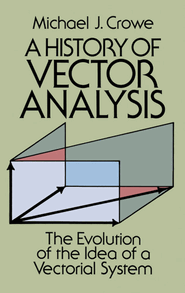
A History of Vector Analysis: The Evolution of the Idea of a Vectorial System

— (Dover Books on Mathematics)

— by Michael J. Crowe

Summary of book

The book has eight chapters: the first on the origins of vector analysis including Ancient Greek and 16th and 17th century influences; the second on the 19th century William Rowan Hamilton and quaternions; the third on other 19th and 18th century vectorial systems; the fourth on the general interest in the 19th century on vectorial systems including analysis of journal publications as well as sections on major figures and their views (e.g., Peter Guthrie Tait as an advocate of Quaternions and James Clerk Maxwell as a critic of Quaternions); the fifth on Josiah Willard Gibbs and Oliver Heaviside and their development of a modern system of vector analysis.

— Wikipedia on A History of Vector Analysis

2013.02.02 Saturday ACHK