Teaching is useless, 3 | 教學無用 3 | 數學教育 6 | 大世界 7
Intellect is invisible to those have none.
– Arthur Schopenhauer
仁者見仁 智者見智 愚者見愚
— Me@2013-05-21 10:27:27 PM
2013.05.23 Thursday (c) All rights reserved by ACHK

Teaching is useless, 3 | 教學無用 3 | 數學教育 6 | 大世界 7
Intellect is invisible to those have none.
– Arthur Schopenhauer
仁者見仁 智者見智 愚者見愚
— Me@2013-05-21 10:27:27 PM
2013.05.23 Thursday (c) All rights reserved by ACHK
A number of years ago I became aware of the large number of physics enthusiasts out there who have no venue to learn modern physics and cosmology. Fat advanced textbooks are not suitable to people who have no teacher to ask questions of, and the popular literature does not go deeply enough to satisfy these curious people. So I started a series of courses on modern physics at Stanford University where I am a professor of physics. The courses are specifically aimed at people who know, or once knew, a bit of algebra and calculus, but are more or less beginners.
— Leonard Susskind
2013.05.20 Monday ACHK
It takes nine months full time to just understand a field of research…
— Me@2011.08.19
… in order to start your research in that field.
— Me@2013.05.15
2013.05.15 Wednesday (c) All rights reserved by ACHK
這段改編自 2010 年 4 月 3 日的對話。
.
教學方面,我有一點點「點石成金」的能力。如果我不向這個方面發展,就好像對不起世界,又對不起自己。但是,如果我不是自僱,而是從事受僱工作,即使那份受僱工作是在日校教書,可以傳授學術知識和讀書心得的機會近乎零。那樣,我就白白荒廢了「點石成金」的能力。
如果我從來也沒有這種能力,那就不用那麼大壓力,生活可能好過很多。據我的觀察,沒有理想追求,不太思考,而又不會關心別人的人,反而較容易過到「幸福」的生活。平庸的地球人,好像自然會找到安定的工作,自然會找到另一半。然後,自然會有自己的子女。
(安:那會不會是你的錯覺?市面上,有很多你所謂「平庸」的人,都是找不到對象的。)
— Me@2013.05.06
.
.
2013.05.06 Monday (c) All rights reserved by ACHK
家長們,老師們,別把我們的價值加諸下一代身上,請給他們一點空間去發掘自己的潛力、自己的理想吧!給他們接受挑戰、挫敗的機會;給他們勇氣和支持,告訴他們並不是每個「有為青年」都要獻身金融、銀行、醫療或法律的。請不要把我們自己未圓的夢、未達的目標,寄託在子女和學生身上。
「一代不如一代」?不如說「一代不同一代」,不要抹殺他們的創意和想像力,不要奪去他們探險歷奇的機會,就讓我們的下一代去塑造他們的未來吧!
— 香港中文大學校長
— 沈祖堯
2013.05.01 Wednesday ACHK
Children learn so fast because they do not know much and do not think much.
— Me@2013-04-18 12:59:54 AM
— Me@2013-04-24 02:07:30 PM
2013.04.24 Wednesday (c) All rights reserved by ACHK
 |
| This is a file from the Wikimedia Commons. |
The Feynman Lectures on Physics is a 1964 physics textbook by Richard P. Feynman, Robert B. Leighton and Matthew Sands, based upon the lectures given by Feynman to undergraduate students at the California Institute of Technology (Caltech) in 1961–1963.
The Feynman Lectures are considered to be one of the best and most sophisticated college level introductions to physics. Feynman, himself, however, stated, in his original preface, that he was “pessimistic” with regard to the success with which he reached all of his students. The Feynman lectures were written “to maintain the interest of very enthusiastic and rather smart students coming out of high schools and into Caltech.” Feynman was targeting the lectures to students who, “at the end of two years of our previous course, [were] very discouraged because there were really very few grand, new, modern ideas presented to them.” As a result, some physics students find the lectures more valuable after they obtain a good grasp of physics by studying more traditional texts. Many professional physicists refer to the lectures at various points in their careers to refresh their minds with regard to basic principles.
As the two-year course (1961–1963) was still being completed, rumor of it spread throughout the physics community. In a special preface to the 1989 edition, David Goodstein and Gerry Neugebauer claim that as time went on, the attendance of registered students dropped sharply but was matched by a compensating increase in the number of faculty and graduate students. Sands, in his memoir accompanying the 2005 edition, contests this claim. Goodstein and Neugebauer also state that, “it was [Feynman’s] peers — scientists, physicists, and professors — who would be the main beneficiaries of his magnificent achievement, which was nothing less than to see physics through the fresh and dynamic perspective of Richard Feynman,” and that his “gift was that he was an extraordinary teacher of teachers”.
— Wikipedia on The Feynman Lectures on Physics
2013.03.13 Wednesday ACHK
Be a consultant, not a teacher.
Being a teacher makes me old; being a consultant makes me young.
— Me@2009.12.11
2013.02.25 Monday (c) All rights reserved by ACHK
I hold with the Swiss psychologist Jean Piaget that the process of learning mathematics is itself a process of rediscovery. A similar view was expressed by the logician Ludwig Witgenstein, asserting in the preface to his famous Tractatus Logico-Philosophicus that he would probably not be understood except by those who had already had similar thoughts themselves.
— A Unified Language for Mathematics and Physics
— David Hestenes
— Clifford Algebras and their Applications in Mathematical Physics
2013.02.18 Monday ACHK
這段改編自 2010 年 4 月 3 日的對話。
第三個難解的數學基礎內容是,為何「零次方是一」。
「零次方是一」的意思是,如果一個數本身不是零,它的零次方,就會等如一。
a^0 = 1
要明白這道公式的來源,我們要首先明白,何謂「次方」。「次方」的意思是「重複相乘」。如果聽眾是小學生,我就會說,「次方」就即是「有多少個英文字母乘在一起」。例如,
a^3 = aaa
「a 三次方」的意思是,有三個 a 相乘在一起。那樣的話,「『a 三次方』乘以『a 二次方』」的意思則會是,把「三個 a」和「兩個 a」各自乘在一起後,再把兩者乘在一起:
(a^3)(a^2) = (aaa)(aa) = a^5
所以,結果有五個 a 乘在一起,簡稱「a 的五次方」。
另外一個講法是,
(a^3)(a^2)
就即是在 (a^3) 的右邊,再乘兩個 a。
(a^3)(a^2)
= (a^3)(aa)
所以,結果有五個 a 乘在一起,簡稱「a 的五次方」。
根據這個講法,
(a^3)(a^0)
的意思則會是,在 (a^3) 的右邊,乘多零個 a。「乘多零個 a」其實就即是「什麼也不乘」。既然是在 (a^3) 的右邊「什麼也不乘」,(a^3)(a^0) 就會等於 (a^3):
(a^3)(a^0) = a^3
如果要符合這個意思,(a^0) 就要定義為 1:
a^0 = 1
如果你偏好直接解釋,你可以這樣說:
(a^0) 就是「乘以零個 a 」。「乘以零個 a 」其實就即是「什麼也不乘」。然後你回想一下,一生之中,學過什麼數字,「乘了等如沒有乘」。數字 1 就有這個效果。
(a^3)(1) = a^3
任何數乘以 1,數值都不會有變。「乘以 1 」等如「什麼也不乘」,符合 (a^0) 的目標。
— Me@2013.02.10
2013.02.11 Monday (c) All rights reserved by ACHK
這段改編自 2010 年 4 月 3 日的對話。
(安:那「負負得正」又如何解釋呢?
如果是
(-5) x (-3)
= +15,
第一個負數,可以理解為「負的金錢數目」。「-5」代表「5 元的欠債」。第二個負數,則要理解為「負的債主數目」。但是,那又是什麼意思?何謂「有 -3 個債主」?)
剛才說,你向甲乙丙三人借錢,每人借給你 5 元。所以,你的身家是 -15 元:
(-5) x 3
= -15
假設,三人中的「丙」,不知何故,突然說毋須你還錢。那樣,你的身家會變成什麼數目?你的身家會增加還是減少?
(安:身家會由 -15 元,變成 -10 元。那應該算是「增加」,因為欠債減少了。)
無錯。由 -15 元變成 -10 元,即是身家多了 5 元:
– 15 + (+5) = -10
現在,我們可以追究一下,如果要運算,算式會是怎樣的。原本你向甲乙丙三人借錢,每人借給你 5 元:
(-5) x 3
= -15
但是,後來「丙」毋須你還,令你的債主數目,少了 1 個,所以債主的數目改變,是 -1:
(-5) x (3-1)
根據常理,你的新身家是 -10:
(-5) x (3-1) = -10
根據「乘法分配性質」,算式左邊會變成:
(-5) x (3) + (-5) x (-1) = -10
再把算式簡化:
-15 + (-5) x (-1) = -10
(-5) x (-1) = -10 + 15
(-5) x (-1) = +5
那樣,我們就推斷到,負負得正。第一個「負」,代表欠債;第二個「負」,就代表少了債主;而結果是「正」,則代表你的財產增加了。
「負負得正」的實質意思是,「債主數目變小」會導致「欠債減少」。「欠債減少」就等價於「財富增加」。
實情是,「負負得正」這個數學規律,最先發現的,不是數學家,或者物理學家,而是會計師。
— Me@2013.02.06
2013.02.06 Wednesday (c) All rights reserved by ACHK
What is trivial to you may not be trivial to others.
So what is boring for you may have a big market.
— Me@2009.12.19
2013.02.05 Tuesday (c) All rights reserved by ACHK
這段改編自 2010 年 4 月 3 日的對話。
另一個難解的數學基礎內容是,為何「負負得正」。
假設你原本的淨資產總值是零。「淨資產總值」簡稱「身家」。你向甲乙丙三人借錢,每人借給你 5 元的話,你的身家就會變成了-15(負十五),因為
(-5) x 3
= -15
在這題算式中,「-5」的負,代表欠債;而「3」,即是「+3」,則代表債主數目。由於你在身無分文下,問人借錢,借了後的身家,一定會少過「0 元」。所以,借錢後的身家是「負數」。
利用這個例子,我們就可以理解,「正負得負」的意思。你問一個人借 5 元,要導致欠債。你問三個人各自借 5 元,都會是欠債。那就是「正負得負」的由來。
(安:那「負負得正」又如何解釋呢?
如果是
(-5) x (-3)
= +15,
第一個負數,可以理解為「負的金錢數目」。「-5」代表「5 元的欠債」。第二個負數,則要理解為「負的債主數目」。但是,那又是什麼意思?何謂「有 -3 個債主」?)
— Me@2013.02.05
2013.02.05 Tuesday (c) All rights reserved by ACHK
這段改編自 2010 年 4 月 3 日的對話。
詳細一點的說,你計算一個面積的大小時,其實就相當於問,該個面積,總共佔了多少個單位方格。如果所佔方格的數目是整數,「行數」和「列數」都會是整體。那樣,你就毋須逐格點算,也可以知道,該塊面積所佔的方格總數。例如,「3 cm x 2 cm」代表了有三行兩列,而每個網格的大小都是 1 cm x 1 cm。所以,方格總數是 3 x 2,等如 6。
如果格數不是整數,「行數」和「列數」就至少有一個不是整數,例如 3.1 cm x 2.1 cm。那代表了,你用來「點算」面積的網格太大,導致網格數目不是整數。
 |
| This file is licensed under the Creative Commons Attribution-Share Alike 3.0 Unported license. |
如果轉用小一點的網格作為單位,你就可以避免小數的出現:
3.1 cm x 2.1 cm
= 31 mm x 21 mm
 |
| This file is licensed under the Creative Commons Attribution-Share Alike 3.0 Unported license. |
這樣,我們就可以用面積的概念來理解,為何「小數乘法」都可以視為,「重複加法」的一個特例。
而「無理數」(irrational number)的意思是,無論單位網格縮到多細,小數也一定會出現。
— Me@2013.02.03
2013.02.03 Sunday (c) All rights reserved by ACHK
這段改編自 2010 年 4 月 3 日的對話。
但是,運算的過程中,你用了乘數表,而乘數表本身,是由加法製成的。換句話說,即使你把「3.1 乘以 2.1」詮釋為「長方形面積」,最終你也要答我,如何把它化成「重複加法」。
3.1 cm x 2.1 cm = ?
如果要把這一道算式化成「重複加法」,唯有將它化成「整數乘法」。我們可以先回顧一下,運算這個面積時,那兩個小數從何而來。小數出現的原因是,單位太大。如果我們轉用小一點的單位,就可以避免小數的出現。
3.1 cm x 2.1 cm
= 31 mm x 21 mm
 |
| This file is licensed under the Creative Commons Attribution-Share Alike 3.0 Unported license. |
換句話說,我們用來「點算」面積的網格太大,導致不能密鋪平面。如果我們轉用小一點的網格作為單位,就可以避免「密不鋪面」的情況出現。
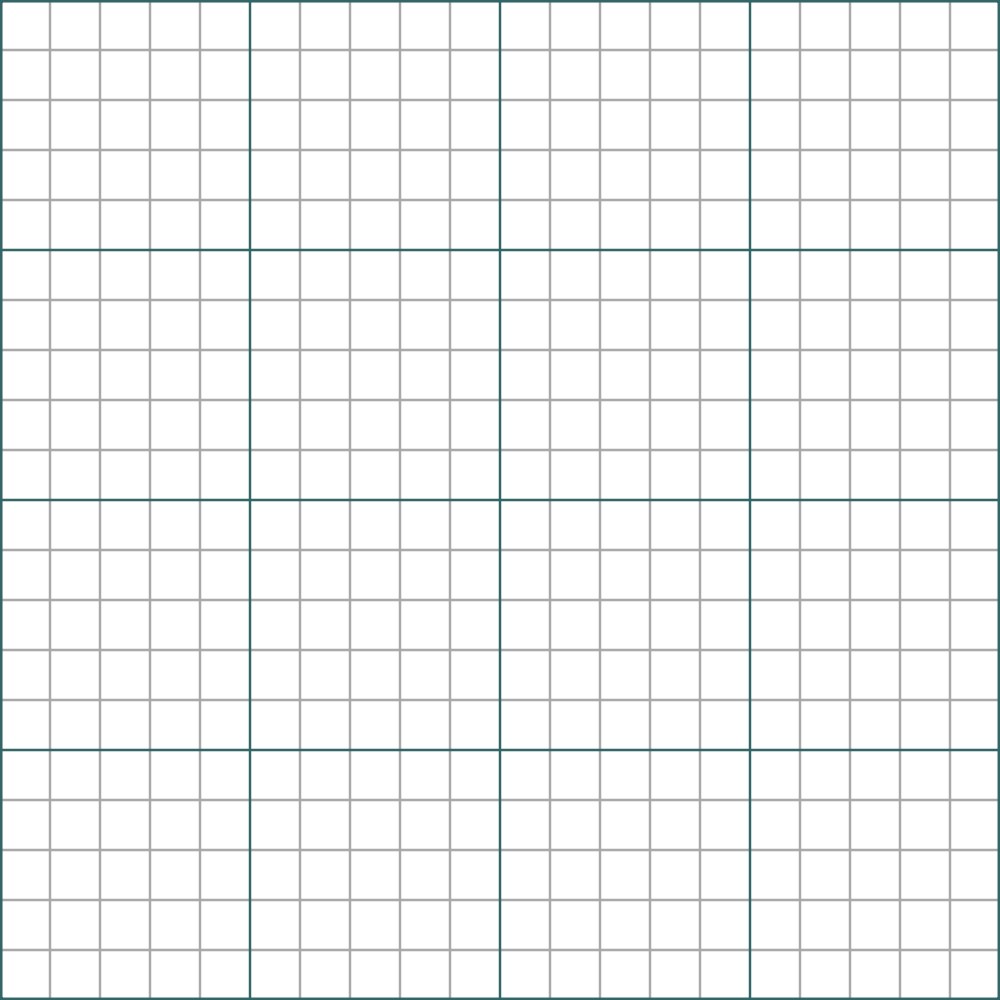 |
| This file is licensed under the Creative Commons Attribution-Share Alike 3.0 Unported license. |
— Me@2013.02.02
2013.02.02 Saturday (c) All rights reserved by ACHK
這段改編自 2010 年 4 月 3 日的對話。
(安:我們可以把「3 乘以 2.1」,看成有三個 2.1 加在一起:
3 x 2.1
= 2.1 x 3
= 2.1 + 2.1 + 2.1
= 6.3
)
都可以。那樣,「3.1 乘以 2.1」呢?
(安:或者,「乘法」的意思不限於「重複加法」。有時,我們可以把「乘法」看成「運算長方形面積」。如果有一個長方形的長闊,分別是 3.1cm 和 2.1cm,他的面積就是「3.1cm 乘以 2.1cm」。)
那即是多少平方厘米呢?
(安:如果用計數機,我們可以立刻知道,
3.1cm x 2.1cm
= 6.51 cm^2
)
但是我現在正正是追問你,「乘法」的真正意思。如果你用計數機,就相當於迴避了問題。
(安:那不難解決。不用計數機的話,我們可以用,小學時所學的「乘法直式」。
3.1
x 2.1
———
6 2
3 1
———
6.5 1
)
但是,運算的過程中,你用了乘數表,而乘數表本身,是由加法製成的。換句話說,即使你把「3.1 乘以 2.1」詮釋為「長方形面積」,最終你也要答我,如何把它化成「重複加法」。
3.1 x 2.1 = ?
— Me@2013.02.01
2013.02.01 Friday (c) All rights reserved by ACHK
這段改編自 2010 年 4 月 3 日的對話。
Young man, in mathematics you don’t understand things. You just get used to them.
— John von Neumann
數學之中,越基礎的內容,有時會越難解釋。那些基礎內容,我們有時會以為自己明白。那只是因為,我們已經習慣了那些東西。「習慣」冒充了「明白」的感覺。例如,「3 乘以 2」 是什麼意思?
(安:「3 乘以 2」即是有兩個 3 加在一起,所以是 6。
3 x 2 = 3 + 3 = 6
)
無錯。那「3 乘以 2.1」 呢?何謂「有 2.1 個 3 加在一起」?
3 x 2.1 = ?
(安:我們可以把「3 乘以 2.1」,看成有三個 2.1 加在一起:
3 x 2.1
= 2.1 x 3
= 2.1 + 2.1 + 2.1
= 6.3
)
都可以。那樣,「3.1 乘以 2.1」呢?
— Me@2013.01.30
2013.01.31 Thursday (c) All rights reserved by ACHK
I’m not a very good speaker. I say “um” a lot. Sometimes I have to pause when I lose my train of thought. I wish I were a better speaker. But I don’t wish I were a better speaker like I wish I were a better writer. What I really want is to have good ideas, and that’s a much bigger part of being a good writer than being a good speaker.
Having good ideas is most of writing well. If you know what you’re talking about, you can say it in the plainest words and you’ll be perceived as having a good style. With speaking it’s the opposite: having good ideas is an alarmingly small component of being a good speaker.
I first noticed this at a conference several years ago. There was another speaker who was much better than me. He had all of us roaring with laughter. I seemed awkward and halting by comparison. Afterward I put my talk online like I usually do. As I was doing it I tried to imagine what a transcript of the other guy’s talk would be like, and it was only then I realized he hadn’t said very much.
— Writing and Speaking
— March 2012
— Paul Graham
2013.01.25 Friday ACHK
Oran had been reading the work of Robert Cialdini, a former psychology professor and an expert in the power of persuasion. Cialdini had run experiments in southern California trying to get homeowners to reduce their energy use. When Cialdini distributed signs urging people to conserve energy to benefit the environment, or to save money, or to benefit future generations, they didn’t respond. But when Cialdini’s signs informed people that their neighbors were changing their ways to save energy, they responded. Energy use went down.
— The Inside Story of MoveOn’s Secret “Silver Bullet” to Deliver Victory for Obama
— By Andy Kroll
— Mother Jones (magazine)
2013.01.13 Sunday ACHK
這段改編自 2010 年 4 月 3 日的對話。
你覺得這個定義,還有沒有漏洞?
(安:暫時未發現到有。你的意思是,如果是物理科,就應該給有興趣讀物理的人,來評價他們物理教員的教學質素。)
無錯。又或者,在一個學期完結時,看看那些「愛智人士」,成績進步的多寡。甚至乎,用所謂的「快樂指數」都可以,因為聽課時,要「明白」才會「快樂」。「明白」會帶來舒服的感覺,而「不明白」則會帶來不安的情緒。
當然,「明白的感覺」不等於「明白」。有時,「明白的感覺」是來自「誤解」。但是,如果有「明白感覺」的,不只是一個人,而是一大班有心聽課讀書的人,那「感覺」就有一定的客觀性,不可能完全是「幻覺」。那「感覺」在很大程度上,是來自真正的「理解」。那樣,「教學質素」就可算是合格。
— Me@2013.01.02
2013.01.03 Thursday (c) All rights reserved by ACHK
 Physics Town
You must be logged in to post a comment.