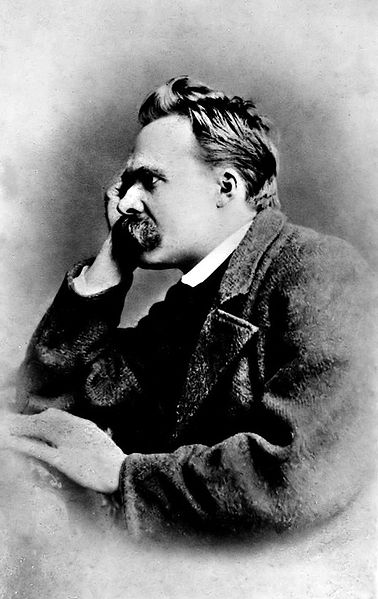
個人大組織 5.1

Madness is the exception in individuals but the rule in groups.

— Friedrich Nietzsche(尼采)

尼采有一句說話,是「個人通常正常,而團體通常瘋狂。」尼采的意思是,個人很少會做出瘋狂的決定,但是團體剛剛相反,往往會做出瘋狂的決定。據我觀察,現實是,一個機構越大,做出愚蠢決定的機會就越大。

(安:我很少閱讀尼采的著作,因為他的文章好像十分混亂,很難可以明白。但是,你時常也引用他的個別句子,而我又覺得那些個別句子非常有意思和十分高層次。)

那你明不明白剛才的那一句?

(安:我暫時只明白它字面上的意思。這句句子有沒有再深奧的含意呢?)

沒有。

在一方面看,這句十分不明顯,因為要想得出這一句,是一件不容易的事情。但是,在另一方面看,這句卻十分明顯,因為只要有人說這一句給你聽,你就會很快地明白和認同它。換言之,「事前孔明」難,「事後孔明」易。

— Me@2010.07.04

2010.07.04 Sunday (c) All rights reserved by ACHK

個人大組織 1.1

So how do you pick good programmers if you’re not a programmer? I don’t think there’s an answer. I was about to say you’d have to find a good programmer to help you hire people. But if you can’t recognize good programmers, how would you even do that?

— Paul Graham

— Me@2010.06.21

2010.06.23 Wednesday (c) All rights reserved by ACHK

Free Software

自由軟體

GNU GPLv3 Logo

“Free software” does not mean “noncommercial.” A free program must be available for commercial use, commercial development, and commercial distribution. Commercial development of free software is no longer unusual; such free commercial software is very important. You may have paid money to get copies of free software, or you may have obtained copies at no charge. But regardless of how you got your copies, you always have the freedom to copy and change the software, even to sell copies.

自由軟體因此並不是「非商業軟體」。自由軟體必須適用於商業用途。自由軟體的商業開發模式已很常見;這樣的自由商業軟體相當重要。

— The Free Software Definition, Free Software Foundation, Inc.

2010.03.02 Tuesday ACHK

個人大組織 4

public domain
Wikipedia

Resistance to the organized mass can be effected only by the man
who is as well organized in his individuality as the mass itself.
–- Carl Jung

The reasonable man adapts himself to the world;
the unreasonable one persists in trying to adapt the world to himself.
Therefore all progress depends on the unreasonable man.
— George Bernard Shaw

蕭伯納說過:「”合理” 的人改變自己來遷就世界;”不合理” 的人改變世界來遷就自己。所以人類世界的進步,都是由 “不合理” 的人所引起的。」

(安:但是,”改變世界” 意思並不明確。所以,這個講法很空泛。)

其實,是有很明確的實際例子的。Richard Stallman 是 Copyleft 的發明者。他不只是對抗一間大公司,而是對抗整個制度。整個自由軟件運動是由他一個人開展的。

“他最大的影響是為自由軟件運動豎立道德政治法律框架。他被許多人譽為當今自由軟件的鬥士、偉大的理想主義者,但同時也有人批評他過於固執、觀點落伍。” — 理查·斯托曼, 維基百科

— Me@2010.02.28

2010.02.28 Sunday (c) All rights reserved by ACHK

個人大組織 3

Copyleft

Copyleft是一由自由軟件運動所發展的概念,是一種利用現有著作權體制來挑戰該體制的授權方式,在自由軟件授權方式中增加copyleft條款之後,該自由軟件除了允許使用者自由使用、散佈、改作之外,copyleft條款更要求使用者改作後的衍生作品必須要以同等的授權方式釋出以回饋社群。

有人將其譯為「著佐權」,以彰顯 Copyleft是補足著作權(Copyright,版權)不足的意義。

Copyleft授權方式雖然與常見的著作權授權模式不同,選擇 copyleft授權方式並不代表作者放棄著作權,反而是貫徹始終,強制被授權者使用同樣授權發佈衍生作品。Copyleft授權條款不反對著作權的基本體制,卻是透過利用著作權法來進一步地促進創作自由。

Copyleft type licenses are a novel use of existing copyright law to ensure a work remains freely available.

— 維基百科

2010.02.27 Saturday ACHK

個人大組織 2

Resistance to the organized mass can be effected only by the man
who is as well organized in his individuality as the mass itself.
–- Carl Jung

另一個例子是,有一個作家甲,在自己的網頁中發表了批評公司乙的言論。公司乙寄律師信給甲,要求他撤回言論。通常在這些情況下,即使理據在作家甲手上,為免捲入法律訴訟而付出昂貴的律師費用,作家甲應該撤回言論。作家甲是個人,公司乙是大財團。即使最後作家甲在法庭中勝訴,律師費都可以令他自己破產。

但是,作家甲卻沒有屈服,據理力爭。他可以這樣勇敢,是因為他的學識深而博。他的語言、邏輯 和 法律知識好到令他可以在法庭上自辯。作家甲由始至終也不用花一分一亳的律師費。公司乙花了三年時間,也不能入作家甲的罪。唯有主動向作家甲提出庭外和解。

作家甲的個人人格比公司乙機構人格,還要完整。所以即使公司乙發瘋,也不能傷害到作家甲。

— Me@2010.02.26

2010.02.26 Friday (c) All rights reserved by ACHK

個人大組織

Wikipedia
public domain image

學院憎恨天才,正像修道院憎恨聖徒。
— 愛默生

Madness is the exception in individuals but the rule in groups.
–- Friedrich Nietzsche(尼采)

尼采的意思是,個人很少會做出瘋狂的決定,但是團體剛剛相反,往往會做出瘋狂的決定。據我觀察,現實是,一個機構越大,做出愚蠢決定的機會就越大。所以,每人也應該學習好,當大機構發瘋時,如何防範被它們傷害。

Resistance to the organized mass can be effected only by the man
who is as well organized in his individuality as the mass itself.
–- Carl Jung

榮格(Carl Jung)有一句是教人如何防範一些大組織:只要你個人的人格,比一個機構的人格還要完整時,該個機構就沒有辦法傷害到你。

(安:什麼是”人格比機構更完整”?)

例如話… 以下是我的解釋,不是榮格的解釋。我明白他的意思,但是以下的是我自己的看法。

一間 organization(機構)要認識所有東西,才可以做生意:一定有人做會計、有人做宣傳、有人做 marketing(市場推廣)、有人造產品、有人做簡報 … 例如,如果我還未有齊這些能力,那就唯有打工(做僱員)。

如何 ”對付” organization 呢?(即是,如何避免要為大機構打工呢?)

那就是我自己本身,要懂以上所列的所有相關事情。起確懂到我自己夠用的程度。這樣的話,我才有能力創業,毋須再為人打工。

(安:但是,根據自然定律,你所說的 “懂齊所有相關事情” 是無可能做到的,除非是 “周身刀,無張利” 的情況。你要擅長一樣東西,一定要專注才有成就。你樣樣都懂,即是沒有專注,導致樣樣都無成就。)

我不是說(例如)我的會計才能要好過大公司內專業的會計師。我只是說,我的會計學識要好到夠我自己用。即是如果我要創業,我要懂基本的會計。即使我的會計學識不是十分深入,起碼我知道有什麼已有的會計電腦程式可以幫到我,又或者知道要聘請哪個會計師幫忙。聘請會計師時,我一定要有基本結實的會計知識,才有能力判斷哪個會是誠實可靠,值得聘用。

— Me@2010.02.24

2010.02.24 Wednesday (c) All rights reserved by ACHK

上班

如果我要上班, 就會所有興趣都發展不到。

我的興趣包括 物理、英文、對話 和 教育等。

無論你有什麼才能,

你都不能做到高過你上司智力的事情。

即是說,你有什麼才能都不能發揮,如果你是做一份一般的工作。

所以,你要發揮才能,就要找一個比你聰明的上司。

(安:又或者找一個不管你,用一個高度自治管理方式的上司。)

如果是這樣的話,即是該位上司很有智慧。

那即是和我第一點”找一個比你聰明的上司”無大分別。

如果不能找一個比自己聰明的上司的話,唯有自雇。

自雇的話,就不可以直接從其他人身上學到新事物。

但是,起碼不會被別人破壞自己的工作成果。

自雇的性質是,如果成功的話,會有很多顧客(上司)。 

如果其中一位顧客(上司)不再錄用你時,你還有其他的顧客(上司)。 

自雇的好處是,如果成功的話,不會被裁員,不會突然失業。

自雇的不好處是需要超巨大量的知識。

而且,起步時的收入近乎零:頭一年要過著貧窮的生活。

— Me@2010.01.14

2010.01.15 Friday (c) All rights reserved by ACHK

Self-Reliance 5

Self-Reliance is an essay written by American Transcendentalist philosopher and essayist, Ralph Waldo Emerson. It was first published in his 1841 collection, Essays: First Series. It contains the most solid statement of one of Emerson’s repeating themes, the need for each individual to avoid conformity and false consistency, and follow his or her own instincts and ideas.

In this essay, Emerson conveys his Transcendentalist philosophy and belief in self-reliance, an essential part of which is to trust in one’s present thoughts and impressions rather than those of other people or of one’s past self. This philosophy is exemplified in the quote: “A foolish consistency is the hobgoblin of little minds.” Emerson stresses the need to believe one’s own thoughts, while actively searching one’s internal mind in order to capture the flash thought that may or may not come across. However, Emerson articulates that although one may have unlimited potential, few actually possess the confidence to develop their minds fully. Emerson then writes, “Trust yourself,” for God will not have his work made manifested by “cowards”. Immediately afterwards, he asserts that everyone has the innate tendency to express independent, genuine verdicts when young, but when young men become adults, Emerson argues, they will become, “clapped into jail by [their] consciousness.”

The essay states that, “To be great is to be misunderstood,” Emerson illustrates this by showing how enormously influential historical characters (Jesus Christ, Pythagoras, Copernicus) were fiercely opposed during their lifetimes, while time later demonstrated their genius.

Emerson also stresses originality, believing in one’s own genius and that creativity lives within all people. From this springs the quote: “Envy is ignorance, imitation is suicide.”

— Wikipedia, December 2007

.

.

2008.01.06 Sunday CHK_2