Fighting the last battle

The second-system effect refers to the tendency of small, elegant, and successful systems to have elephantine, feature-laden monstrosities as their successors. The term was first used by Fred Brooks in his classic The Mythical Man-Month. It described the jump from a set of simple operating systems on the IBM 700/7000 series to OS/360 on the 360 series.

Explanation

Although expressed as a problem of software design, the second-system effect is observable throughout all human design effort. It is somewhat akin to the idea of “fighting the last battle.”

People who have designed something only once before, try to do all the things they “did not get to do last time,” loading the project up with all the things they put off while making version one, even if most of them should be put off in version two as well.

Examples could include DOS to Win95 or Unix to GNU, using a simple metric like source lines of code to mark the difference.

— Wikipedia on Second-system effect

2012.07.21 Saturday ACHK

Indie Game: The Movie

Indie Game: The Movie is a 2012 documentary film by Canadian filmmakers James Swirsky and Lisanne Pajot. The film documents the struggles of independent game developers Edmund McMillen and Tommy Refenes during the development of Super Meat Boy, Phil Fish, during the development of Fez, and also Jonathan Blow, who reflects on the success of his Xbox Live Arcade game, Braid.

The film bookends itself with Jonathan Blow’s opening monologue about how indie gaming differs by offering flaws and vulnerabilities, making the games more personal.

— Wikipedia on Indie Game: The Movie

2012.07.18 Wednesday ACHK

To the Moon

GOG.com

In GameSpot’s 2011 Game of the Year awards, To the Moon was given the “Best Story” award, … It was also the highest user-rated PC game of 2011 at Metacritic.

— Wikipedia on To the Moon (video game)

2012.07.16 Monday ACHK

Exponentiation by squaring

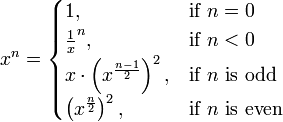
Using the following observation, one can create a recursive algorithm that computes x^n for an integer n using squaring and multiplication:

[The second line is incorrect, for the power should be –n. — Me@2012-07-14] 

A brief analysis shows that such an algorithm uses log_2 (n) squarings and at most log_2 (n) multiplications. For n > about 4 this is computationally more efficient than naively multiplying the base with itself repeatedly.

— Wikipedia on Exponentiation by squaring

2012.07.14 Saturday ACHK

Good Old Games

GOG.com (formerly Good Old Games) is a computer game sale and distribution service operated by GOG Ltd, a wholly owned subsidiary of CD Projekt RED.

In order to ensure compatibility with newer versions of Microsoft Windows, some games are pre-patched or bundled with Open Source emulation and compatibility software, such as ScummVM and DOSBox. Unlike some other services, the games do not use digital rights management …

Along with purchasing the games, customers are also able to download numerous extra material relating to the game they purchased. Often these extras include the game’s soundtrack, wallpapers, avatars, and manuals.

— Wikipedia on GOG.com

2012.07.04 Wednesday ACHK

Chrono Trigger 3

.

Masato Kato confirmed that Cross featured a central theme of parallel worlds, as well as the fate of Schala, which he was previously unable to expound upon in Chrono Trigger. Concerning the ending sequences showing Kid searching for someone in a modern city, he hoped to make players realize that alternate futures and possibilities may exist in their own lives, and that this realization would “not … stop with the game”.

– Wikipedia on Chrono Cross

.

.

.

2011.05.02 Monday ACHK

Sins of a Solar Empire

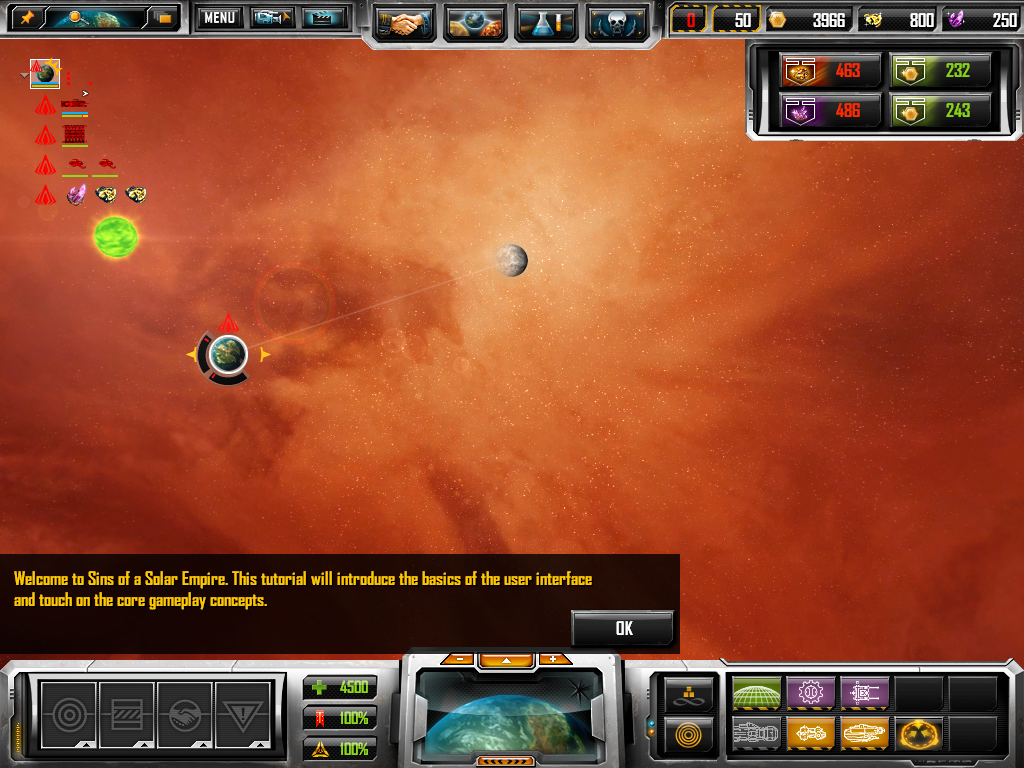
Sins of a Solar Empire is a science fiction real-time strategy computer game developed by Ironclad Games and published by Stardock Entertainment for Microsoft Windows operating systems. Sins is a real-time strategy (RTS) game that incorporates some elements from 4X strategy games; promotional materials describe it as “RT4X.”

Much praise for the game has been directed towards the game’s clever blend of RTS and 4X gameplay, the seamless zoom function, and the user-friendly Empire Tree and UI. That the game was designed to play efficiently on older as well as newer PCs has garnered considerable praise.

The game was awarded the title “Best Strategy Game of the Year 2008” by X-Play and GameTrailers, and the title “Best PC Game of the Year” by IGN.

— Wikipedia on Sins of a Solar Empire

2012.07.01 Sunday ACHK

Simple and fun gameplay

During the late 1970s, video arcade game technology had become sophisticated enough to offer good-quality graphics and sounds, but it was still fairly basic (realistic images and full motion video were not yet available, and only a few games used spoken voice) and so the success of a game had to rely on simple and fun gameplay. This emphasis on the gameplay is why many of these games continue to be enjoyed today despite their technology being vastly outdated by modern computing technology.

— Wikipedia on Golden age of arcade video games

2012.07.01 Sunday ACHK

Zawinski’s law of software envelopment

Zawinski’s Law of Software Envelopment relates the pressure of popularity to the phenomenon of software bloat:

Every program attempts to expand until it can read mail. Those programs which cannot so expand are replaced by ones which can.

Examples of the law in action include Emacs, MATLAB, Mozilla and Opera.

— Wikipedia on Jamie Zawinski

2012.06.28 Thursday ACHK

Plan 9

Plan 9 failed simply because it fell short of being a compelling enough improvement on Unix to displace its ancestor. Compared to Plan 9, Unix creaks and clanks and has obvious rust spots, but it gets the job done well enough to hold its position. There is a lesson here for ambitious system architects: the most dangerous enemy of a better solution is an existing codebase that is just good enough.

— Eric S. Raymond

— Wikipedia on Plan 9 from Bell Labs

2012.06.27 Wednesday ACHK

Games for Change

Games for Change (also known as G4C) is a movement and community of practice dedicated to using digital games for social change. An individual game may also be referred to as a “game for change” if it is produced by this community or shares its ideals.

The Games for Change Festival

Since 2004, Games for Change has hosted the Games for Change Festival in New York. Often referred to as “the Sundance of Video Games”, the Games for Change Annual Festival is the biggest gaming event in New York City. It brings together leaders from government, corporations, philanthropy, civil society, media, academia, and the gaming industry to explore the increasing real-world impact of digital games as an agent for social change.

— Wikipedia on Games for Change

2012.06.24 Sunday ACHK

Civilization II

In June 2012, a Reddit user named Lycerius posted details of his decade long Civilization II game, since dubbed “The Eternal War”. This garnered a great deal of interest from users of the site and the story quickly went viral, spreading across the web to many well known blogs and news sites. The game, which had been played since 2002, closely mimicked the regime found in the novel Nineteen Eighty-Four, with three superpowers all engaged in multiple-front warfare.

— Wikipedia on Civilization II

I’ve been playing the same game of Civ II for 10 years. Though long outdated, I grew fascinated with this particular game because by the time Civ III was released, I was already well into the distant future. I then thought that it might be interesting to see just how far into the future I could get and see what the ramifications would be. Naturally I play other games and have a life, but I often return to this game when I’m not doing anything and carry on. The results are as follows.

  • The world is a hellish nightmare of suffering and devastation.
  • There are 3 remaining super nations in the year 3991 A.D, each competing for the scant resources left on the planet after dozens of nuclear wars have rendered vast swaths of the world uninhabitable wastelands.

— I’ve been playing the same game of Civilization II for almost 10 years. This is the result. (self.gaming)

— submitted 8 days ago* by Lycerius

2012.06.21 Thursday ACHK

The Dragon Book, 2

Most people don’t realize that writing a compiler like this is only about 2 months work for one talented person who read the Dragon book. Since the compiler only has one body of code to compile, it is much easier to write. It doesn’t have to be a general-purpose compiler. It doesn’t have a math library, for example.

And we have the ability to add any feature to the language that we want easily… this is the same power Paul Graham talks about in On Lisp, the power to invent new language features that suit your exact application domain. Lisp does this through a mechanism called macros.

— Wasabi

— Joel on Software

— Joel Spolsky

2012.06.20 Wednesday ACHK

Civilization V

Sid Meier’s Civilization V (also known as Civilization 5 or Civ 5) is a turn-based strategy, 4X computer game developed by Firaxis, released on Microsoft Windows in September 2010 and on Mac OS X on November 23, 2010. It is the latest game in the Civilization series.

In Civilization V, the player leads a civilization from prehistoric times into the future on a procedurally-generated map, achieving one of a number of different victory conditions through research, diplomacy, expansion, economic development, government and military conquest.

— Wikipedia on Civilization V

2012.06.19 Tuesday ACHK

Gamification

The Problem with Gamification is that it tries to solve a problem that doesn’t exist. We already have a universal points system, across all aspects of life, that represents status and is redeemable for real world prizes. It’s called “money.”

— Greg Costikyan

2012.06.19 Tuesday ACHK

The Dragon Book

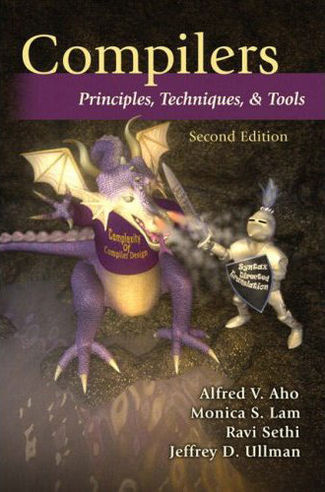
Compilers: Principles, Techniques, and Tools is a famous computer science textbook by Alfred V. Aho, Monica S. Lam, Ravi Sethi, and Jeffrey D. Ullman about compiler construction. Although more than two decades have passed since the publication of the first edition, it is widely regarded as the classic definitive compiler technology text.

It is affectionately known as the Dragon Book to a generation of computer scientists as its cover depicts a knight and a dragon in battle, a metaphor for conquering complexity. This name can also refer to Aho and Ullman’s older Principles of Compiler Design.

— Wikipedia on Compilers: Principles, Techniques, and Tools

2012.06.18 Monday ACHK