Wikipedia
public domain image
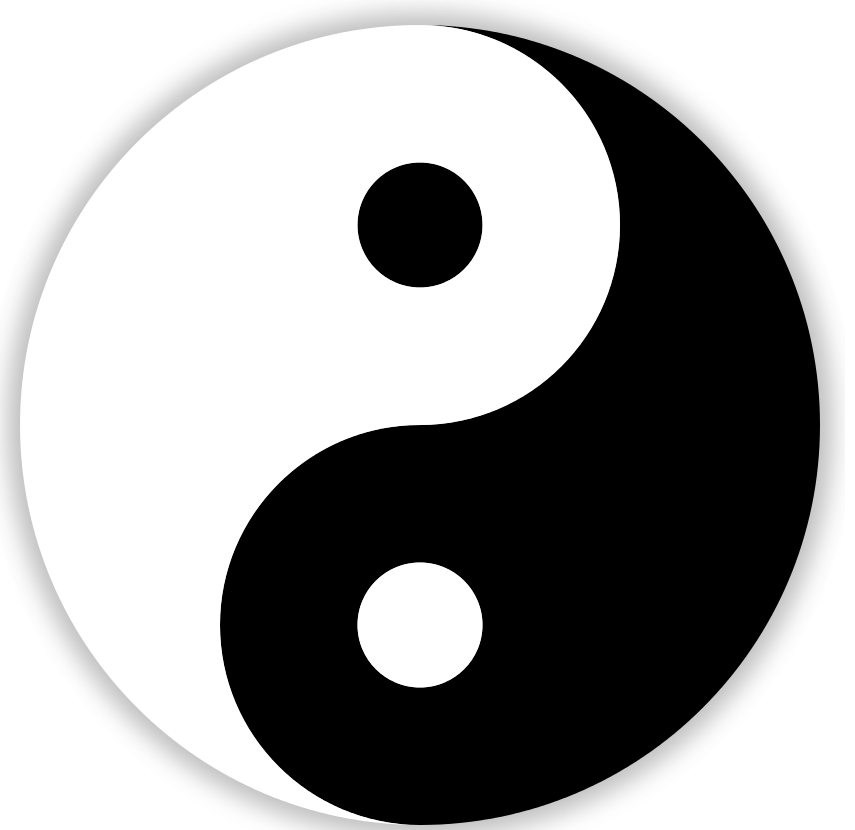
陽之極為陰 陰之極為陽
《漫畫榮格》
我們平日看書時會間書:用紅筆間低重要的句子。
間書的一個極端是一句也不間。那我們就不知哪些是重要句子。
間書的另一個極端是句句間。那我們也不知哪些是重要句子。
— Me@2003-2004
2007.11.18 Sunday 2010.02.05 Friday (c) CHK2 ACHK

《漫畫榮格》
間書的一個極端是一句也不間。那我們就不知哪些是重要句子。
間書的另一個極端是句句間。那我們也不知哪些是重要句子。
— Me@2003-2004
2007.11.18 Sunday 2010.02.05 Friday (c) CHK2 ACHK
“Past papers” means “past HKCEE/HKAL examination papers”. The topic is for Hong Kong students who are facing the HKCEE or HKAL. But the general principles can also be used for tackling other public examinations.
.
做 pastpaper 有兩種方法:
.
1. 按年份做:例如今天做 1990 年的考試題目,明天做 1991 年的考試題目,如此類推。
每次一定要計時計分。即是要限時完成,完成後要為自己批改,計分數。然後做改正。
這方法有多個好處:
每次也知道自己的分數,可以客觀知道,自己的實力,不會有無謂的自卑,或者不切實際的期望。每天有一個明確分數,可以見到自己的進步。這樣就可以避免,不必要的不安情緒。
因為每年的 pastpaper 都包含了,幾乎所有課題 (topics)。這樣,可以避免「溫了一個 topic 後,會忘記之前 topic」 的情況:不斷按年份做 pastpaper,自然不斷反芻所有 topic,記得所有 topic。
.
2. 按 topic 做:有兩種情況,應該按 topic 練 pastpaper:
有特別弱的 topic
按 topic 做 pastpaper 時,應該先做 MC (Multiple Choices)。MC 可以先幫你,釐清概念 (concepts):
MC 不像 LQ (Long questions)。每題 LQ 都分成幾 part,逐步教你完成整題題目。即使你不完全明白該題目,也可以拿到一定的分數。但是,MC 是沒有步驟提示的。而且,同一題MC 的各個選擇,都相當接近,concept 稍為不清晰,一分都得不到。
每個 topic/chapter 其實來來去去考的,都只是幾個主要的,concept 或者技巧。對初學者來說,要知道該幾個 concept,或技巧是什麼。並不容易。但是,當同類(同一 topic) 的MC放在一起時,由於它們會用不同的字眼,不斷地重複問,同樣的幾個 concept,即使對初學者而言,都會對那幾個主要concept/技巧,有較深刻的印象。
記住:按 topic 做 pastpaper 時,先做 MC,再做 LQ。
.
兩種方法都要使用。兩種方法相輔相成:按年份做,自然知道自己, 在哪些 topic 特別弱,從而針對該幾個 topic,專練該幾個 topic 的 pastpaper。
— Me@2010.01.10
— Me@2010.05.21
.
.
2010.05.21 Friday (c) All rights reserved by ACHK
.
You do not have to fear the exams,
for every day is an exam.
— Me@2009.11.04
.
.
.
2009.11.06 Monday
缺點魚 | 水清則無魚
.
你不斷提昇自己,
把自己一個一個的缺點刪除.
當你一個缺點都有沒有時,
你會發現
自己的所有優點也同時消失了.
.
–Me
.
.
.
2009.07.14 Tuesday
Everything can be described as either yin or yang.
1. Yin and yang are opposites.
Everything has its opposite—although this is never absolute, only comparative. No one thing is completely yin or completely yang. Each contains the seed of its opposite. For example, cold can turn into hot; “what goes up must come down”.
2. Yin and yang are interdependent.
One cannot exist without the other. For example, day cannot exist without night.
3. Yin and yang can be further subdivided into yin and yang.
Any yin or yang aspect can be further subdivided into yin and yang. For example, temperature can be seen as either hot or cold. However, hot can be further divided into warm or burning; cold into cool or icy.
4. Yin and yang consume and support each other.
Yin and yang are usually held in balance—as one increases, the other decreases. However, imbalances can occur. There are four possible imbalances: Excess yin, excess yang, yin deficiency, yang deficiency.
5. Yin and yang can transform into one another.
At a particular stage, yin can transform into yang and vice versa. For example, night changes into day; warmth cools; life changes to death.
6. Part of Yin is in Yang and part of Yang is in Yin.
The dots in each serve as a reminder that there are always traces of one in the other. For example, humans will always be both good and evil, never completely one or the other.
— Wikipedia
.
.
2007.10.27 Saturday CHK2

 Physics Town