有所作為
The difference that makes no difference makes no difference.
—
無關痛癢的分別,毋須理會;
無關痛癢的改變,不作也罷。
— Me@2011.08.14
2011.08.14 Sunday (c) All rights reserved by ACHK

有所作為
The difference that makes no difference makes no difference.
—
無關痛癢的分別,毋須理會;
無關痛癢的改變,不作也罷。
— Me@2011.08.14
2011.08.14 Sunday (c) All rights reserved by ACHK
Structure and Interpretation of Computer Programs
程式時間 0
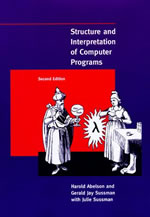
You can read this book from the book’s official website. I recommend the section The Nature of Time in Concurrent Systems.
— Me@2011.08.12
2011.08.12 Friday ACHK
The direction of time that we can remember is called “the past”.
We cannot remember both directions, for if we can, we will remember infinite things.
— Me@2011.07.16
2011.08.10 Wednesday (c) All rights reserved by ACHK
小宇宙大爆炸
Free will, 6
Each decision is a kind of first cause, so it is a kind of big bang.
— Me@2011.07.14
2011.08.09 Tuesday (c) All rights reserved by ACHK
The quantum arrow of time
According to the Copenhagen interpretation of quantum mechanics, quantum evolution is governed by the Schrodinger equation, which is time-symmetric, and by wave function collapse, which is time irreversible. As the mechanism of wave function collapse is philosophically obscure, it is not completely clear how this arrow links to the others. Despite the post-measurement state being entirely stochastic in formulations of quantum mechanics, a link to the thermodynamic arrow has been proposed, noting that the second law of thermodynamics amounts to an observation that nature shows a bias for collapsing wave functions into higher entropy states versus lower ones, and the claim that this is merely due to more possible states being high entropy runs afoul of Loschmidt’s paradox. According to the modern physical view of wave function collapse, the theory of quantum decoherence, the quantum arrow of time is a consequence of the thermodynamic arrow of time.
— Wikipedia on Arrow of time
2011.08.07 Sunday ACHK
Only the first step, the decision, is free, for otherwise you cannot control your body to implement your decision.
Other steps have to follow the classical physical laws (i.e. decoherent quantum mechanical laws).
— Me@2011.07.14
— Me@2011.08.06
2011.08.06 Saturday (c) All rights reserved by ACHK
Cumulative concept of time, 8
Since my present-self have the memory of my younger self, my younger self is part of my present-self.
1. What is the meaning of the “same” file?
If two files contain exactly the same data, they are the “same” file.
2. Memory is the definition of identity.
Since I have the memory of my younger self, I am the same person as my younger self. Moreover, since I have more memory than my younger self, I am more than my younger self. My younger self is part of me.
3. If I am a book, my younger self is like the one with fewer chapters:
younger self ~ chapter 1,2,3
older self ~ chapter 1,2,3,4,5,6
— Me@2011.07.10
— Me@2011.08.04
2011.08.04 Thursday (c) All rights reserved by ACHK
這段改編自 2010 年 3 月 6 日的對話。
我在前晚發現,我一直在研究的兩個課題,原來在某個角度之下,是同一樣東西。
(安:哪兩樣東西呢?)
一個就是 Paul Graham 強烈推介的 Lisp programming language(Lisp 編程語言)。另一個就是 John Baez 強烈推介的 Category Theory(範疇論)。
利用「範疇論」,我們可以將「相對論」的數學語言和「量子力學」的數學語言,統一成一套數學語言。留意,我不是指統一「相對論」和「量子力學」本身,而是指統一它們的數學語言。「相對論」所用的數學語言是 differential geometry(微分幾何)。「量子力學」所用的數學語言是 representation theory(表示論)。
Lisp 和「範疇論」都是我幾年前就開始關心的課題。最近才發現,它們竟然是「同一樣」東西,令我十分驚奇。幾天前,我還正正考慮著,好不好暫時放棄其中一門,因為我沒有時間同時深入研究 Lisp 和「範疇論」。現在,問題突然消失。
彷彿是同時愛上了兩位女仕,最終要二擇其一。正當面臨痛苦決擇之際,發現她們,竟然是同一個人。
— Me@2011.08.03
2011.08.03 Thursday (c) All rights reserved by ACHK
Rich Hickey developed Clojure because he wanted a modern Lisp for functional programming, symbiotic with the established Java platform, and designed for concurrency.
Clojure’s approach to concurrency is characterized by the concept of identities, which represent a series of immutable states over time. Since states are immutable values, any number of workers can operate on them in parallel, and concurrency becomes a question of managing changes from one state to another. For this purpose, Clojure provides several mutable reference types, each having well-defined semantics for the transition between states.
— Wikipedia on Clojure
2011.08.03 Wednesday ACHK
Why is the past the necessary condition for the present?
1 = {1}, 2 = {1,2}, …
one = {first}, two = {first, second}, …
e.g. a necessary condition of having 3 apples is having 2 apples.
— Me@2011.07.05
— Me@2011.07.29
2011.07.29 Friday (c) All rights reserved by ACHK
“Tomorrow” has two possible meanings,
e.g. “tomorrow’s blog” can refer to
the blog posts written on tomorrow
or
the total blog posts you have tomorrow.
— Me@2011.07.05
2011.07.27 Wednesday (c) All rights reserved by ACHK
In a sense, a human is a macroscopic quantum-coherent object.
A human’s mind lies in a box: planck spacetime box.
A free will uses macroscopic laws until meeting other free wills.
— Me@2011.07.04
— Me@2011.07.26
2011.07.26 Tuesday (c) All rights reserved by ACHK
In a sense, human is a macroscopic coherent quantum system.
A human action manifests a decision, which collapses a quantum wavefunction.
— Me@2011.07.04
— Me@2011.07.23
2011.07.23 Saturday (c) All rights reserved by ACHK
Time reversal of the known dynamical laws
Particle physics codified the basic laws of dynamics into the standard model. This is formulated as a quantum field theory that has CPT symmetry, i.e., the laws are invariant under simultaneous operation of time reversal, parity and charge conjugation. However, time reversal itself is seen not to be a symmetry (this is usually called CP violation). There are two possible origins of this asymmetry, one through the mixing of different flavours of quarks in their weak decays, the second through a direct CP violation in strong interactions. The first is seen in experiments, the second is strongly constrained by the non-observation of the EDM of a neutron.
It is important to stress that this time reversal violation is unrelated to the second law of thermodynamics, because due to the conservation of the CPT symmetry, the effect of time reversal is to rename particles as antiparticles and vice versa. Thus the second law of thermodynamics is thought to originate in the initial conditions in the universe.
— Wikipedia on T-symmetry
2011.07.22 Friday ACHK
Another way of dealing with Loschmidt’s paradox is to see the second law as an expression of a set of boundary conditions, in which our universe’s time coordinate has a low-entropy starting point: the Big Bang.
— Wikipedia on Loschmidt’s paradox
.
.
2011.07.20 Wednesday ACHK
Loschmidt’s paradox 2
In kinetic theory in physics, molecular chaos is the assumption that the velocities of colliding particles are uncorrelated, and independent of position. This assumption, also called in the writings of Boltzmann the Stosszahlansatz (collision number hypothesis), makes many calculations tractable.
In particular, the assumption of molecular chaos was a key element, although initially unrecognised, in Boltzmann’s H-theorem of 1872, which attempted to use kinetic theory to show that the entropy of a gas prepared in a state of less than complete disorder must inevitably increase, as the gas molecules are allowed to collide.
This drew the objection from Loschmidt that it should not be possible to deduce an irreversible process from time-symmetric dynamics and a time-symmetric formalism: something must be wrong (Loschmidt’s paradox).
The resolution (1895) of this paradox is that the velocities of two particles after a collision are no longer truly uncorrelated. By asserting that it was acceptable to ignore these correlations in the population at times after the initial time, Boltzmann had introduced an element of time asymmetry through the formalism of his calculation.
— Wikipedia on Molecular chaos
2011.07.18 Monday ACHK
Eddington then gives three points to note about this arrow:
1. It is vividly recognized by consciousness.
2. It is equally insisted on by our reasoning faculty, which tells us that a reversal of the arrow would render the external world nonsensical.
3. It makes no appearance in physical science except in the study of organization of a number of individuals.
— Wikipedia on Arrow of time
2011.07.17 Sunday ACHK
Loschmidt’s paradox
Loschmidt’s paradox, also known as the reversibility paradox, is the objection that it should not be possible to deduce an irreversible process from time-symmetric dynamics.
This puts the time reversal symmetry of (almost) all known low-level fundamental physical processes at odds with any attempt to infer from them the second law of thermodynamics which describes the behavior of macroscopic systems.
Both of these are well-accepted principles in physics, with sound observational and theoretical support, yet they seem to be in conflict; hence the paradox.
— Wikipedia on Second law of thermodynamics
2011.07.13 Wednesday ACHK
先決條件 3
past = the necessary conditions of present
because
present = the summation of all past events
— Me@2011.06.19
2011.07.11 Monday (c) All rights reserved by ACHK
Now-state is the summation of all past events,
acting on the initial state of the universe.
In this sense, time is a counting number:
counting the number of events since the big bang.
For states, the now-state is not the summation of all past states.
In this sense, time is an ordering number:
putting different states of each “same” object in order.
— Me@2011.06.20
— Me@2011.07.09
2011.07.09 Saturday (c) All rights reserved by ACHK
 Physics Town
You must be logged in to post a comment.