In short: spin-1/2 particles are quaternions!
Thus the meaning of j is time reversal.
— John Baez
2010.05.29 Saturday ACHK

In short: spin-1/2 particles are quaternions!
Thus the meaning of j is time reversal.
— John Baez
2010.05.29 Saturday ACHK
# 0-dimensional singularity: magnetic monopole
# 1-dimensional singularity: cosmic string
# 2-dimensional singularity: domain wall
— Wikipedia on Gravitational singularity
2010.05.28 Friday ACHK
The data types turn out to be analogous to types of particles, while the programs are analogous to Feynman diagrams with a given collection of particles coming in and another collection going out.
— Categorifying Fundamental Physics, John Baez
2010.05.27 Thursday ACHK
多次元宇宙 19
另一個講法是,每一科都是描述「宇宙本體」的一種「語言」。任何「語言」,也可以用來寫文章。只要你把自己的「語言」掌握得好,你就可以描述這個世界。
但是,有些「字眼」只會在某一種「語言」中出現。如果你只掌握一種「語言」的話,宇宙中的某些事物,你會描述不到。所以,你最好掌握超個一種「語言」。如果你可以掌握到兩三種「語言」的話,我估計,世界上超過 99% 的東西,你也可以清晰描述得到。
— Me@2010.05.26
2010.05.26 Wednesday (c) All rights reserved by ACHK
Similar to the statement that
Nothing in biology makes sense except in the light of evolution
the nPOV asserts that
Nothing in mathematics makes sense except in the light of higher category theory.
— nLab
2010.05.26 Wednesday ACHK
Lisp … made me aware that software could be close to executable mathematics.
— L. Peter Deutsch
2010.05.25 Tuesday ACHK
大腦程式員 4
多次元宇宙 18
每一科,都可以看成「本體」的一個「投影」。透過任何一個「投影」,你都可以理解「本體」。最重要的是,在你所選的「投影」路上,有一位老師指點得清楚,你就可以到達「本體」。
(安:你所講的「本體」,是指「宇宙本體」?)
仁者見仁,智者見智。你可以選擇你最喜歡的詮釋,去理解「本體」這兩個字的意思。例如,這裡所講的「本體」,可以是指「學問本體」。當然,你又可以追問,「什麼為之『學問本體』?」
(安:無錯。例如,我又可以問,「『學問本體』和『宇宙本體』有什麼關係?」)
所以,為免節外生枝去爭論「何謂『本體』」,我剛才建議你自己詮釋「本體」,選擇「本體」這兩個字的意思。最重要的是,在現在的上文下理中,你所選擇的詮釋,是正確、有意義 和 有趣(true, meaningful and interesting)。
— Me@2010.05.24
2010.05.24 Monday (c) All rights reserved by ACHK
So, we can only hope that in the future, more interaction between mathematics, physics, logic and philosophy will lead to new ways of thinking about quantum theory — and quantum gravity — that take advantage of the internal logic of categories like Hilb and nCob.
— Quantum Quandaries: A Category-Theoretic Perspective, John C. Baez
2010.05.19 Wednesday ACHK
Some interactions cannot be simply described by a potential energy V(x). The magnetic force is the most obvious example.
— Kenneth Young
2010.05.17 Monday ACHK
(安:原初我們是講有關「level」(境界)的問題。你用了「搞 gag」(弄笑話)來比喻。結果,這個「搞 gag」比喻發展出很多內容,可以獨立成篇。)
我就發覺我有這個能力:無論你給我什麼題目,大部分情況下,我也可以 generate(製作)出很多有趣的內容。我把這個能力叫做「話題魔法」。
而且,我還知道我懂「話題魔法」的原因。我把那些原因叫做「話題魔法理論」。
(安:那這個理論可以公開嗎?還是好像魔術師一樣,要遵守「魔法守則」,不可以公開魔術竅門?)
可以公開,不難解釋。我這個理論的靈感來自數學和物理。所以說,「讀得書多」是有用的。「讀得書多」令你多了很多神奇科幻的「思考工具」,去掌握日常生活的問題。
以下是「話題魔法理論」:
****************************************
以下是數學內容,沒有高等數學背景的朋友,可以把這部分略過:
每個「向量空間」都有很多 position vectors(位置向量)。但是,independent vectors(互相獨立的向量)其實很少。
例如,一個三次元空間有很多點(point),而每一點都可以用一支 position vector 來代表。所以,一個三次元空間有很多支 position vectors。但是,對於那個三次元空間來說,最多只能有三支 independent vectors。
所以,要表達那個三次元空間的任何點的話,我沒有必要事先收集所有點的 position vectors。我需要的,只是三支 independent vectors,因為有三支 independent vectors (i, j, k) 的話,我就可以把任何 vector a 表達成 i, j, k 的線性組合(linear combination):
a = a_x i + a_y j + a_z k = (a_x, a_y, a_z)
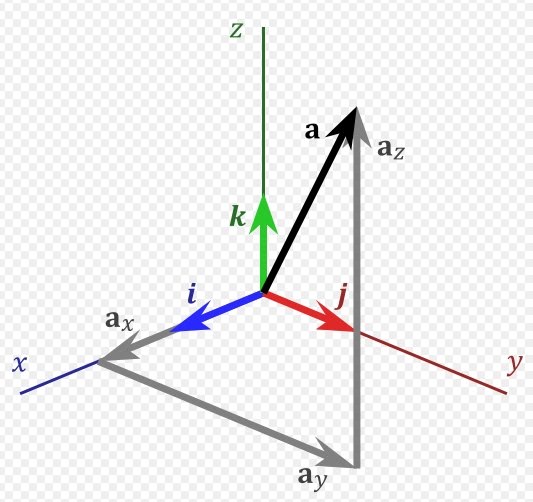
如果你只收集了兩支 independent vectors 的話,那就真是很抱歉,因為你不能表達三次元空間上所有點的 position vectors。例如,如果你只收集了 i, j 而沒有 k 的話,你只可以表達 x-y 平面上的點。那個平面以外的點,你通通不能表達。
對於三次元空間來說,{i, j, k}這三支 independent vectors 組成了一個 complete set(完備集合)。「完備」的意思是,只要有集合內的 vectors(i, j, k),就可以表達空間上任何一點的 position vectors。
— Me@2010.05.08
2010.05.09 Sunday (c) All rights reserved by ACHK
.
Sometimes physicists write the definition in terms of a limit and the Dirac delta function, :
.
Relationship between the mathematical and physical definitions
The mathematicians’ definition and the physicists’ definition of the functional derivative differ only in the physical interpretation. Since the mathematical definition is based on a relationship that holds for all test functions f, it should also hold when f is chosen to be a specific function. The only handwaving difficulty is that specific function was chosen to be a delta function — which is not a valid test function.
In the mathematical definition, the functional derivative describes how the entire functional, , changes as a result of a small change in the function
. Observe that the particular form of the change in
is not specified. The physics definition, by contrast, employs a particular form of the perturbation — namely, the delta function — and the ‘meaning’ is that we are varying
only about some neighborhood of y. Outside of this neighborhood, there is no variation in
.
— Wikipedia on Functional derivative
2010.05.08 Saturday ACHK

— Wikipedia on First variation
2010.05.07 Friday ACHK
Last step
This last step is best explained first in a certain limit. In order to describe our world, strings must be extremely tiny objects. So when one studies string theory at low energies, it becomes difficult to see that strings are extended objects — they become effectively zero-dimensional (pointlike). Consequently, the quantum theory describing the low energy limit is a theory that describes the dynamics of these points moving in spacetime, rather than strings. Such theories are called quantum field theories.
However, since string theory also describes gravitational interactions, one expects the low-energy theory to describe particles moving in gravitational backgrounds. Finally, since superstring string theories are supersymmetric, one expects to see supersymmetry appearing in the low-energy approximation. These three facts imply that the low-energy approximation to a superstring theory is a supergravity theory.
— Wikipedia on M-theory
2010.05.06 Thursday ACHK
M-theory is not yet complete; however it can be applied in many situations (usually by exploiting string theoretic dualities [clarification needed]). The theory of electromagnetism was also in such a state in the mid-19th century; there were separate theories for electricity and magnetism and, although they were known to be related, the exact relationship was not clear until James Clerk Maxwell published his equations, in his 1864 paper A Dynamical Theory of the Electromagnetic Field. Witten has suggested that a general formulation of M-theory will probably require the development of new mathematical language.
— Wikipedia on M-theory
2010.05.05 Wednesday ACHK
In physics, the AdS/CFT correspondence (anti-de-Sitter space/conformal field theory correspondence), sometimes called the Maldacena duality, is the conjectured equivalence between a string theory defined on one space, and a quantum field theory without gravity defined on the conformal boundary of this space, whose dimension is lower by one or more.
— Wikipedia on AdS/CFT correspondence
2010.05.04 Tuesday ACHK
Physicists learned rather unexpectedly, beginning in the early 1970s, that the problem of quantum gravity could be overcome by introducing a new sort of fuzziness. One replaces “point particles” by “strings”. Of course, the point particles and strings must both be treated quantum mechanically. Quantum effects are proportional to Planck’s constant 


— Edward Witten
.
.
2010.05.03 Monday ACHK
The real numbers are the dependable breadwinner of the family, the complete ordered field we all rely on. The complex numbers are a slightly flashier but still respectable younger brother: not ordered, but algebraically complete. The quaternions, being noncommutative, are the eccentric cousin who is shunned at important family gatherings. But the octonions are the crazy old uncle nobody lets out of the attic: they are nonassociative.
— John Baez
2010.05.02 Sunday ACHK
Golden ratio
The number 5 is quirky and intriguing, thanks in large part to its relation with the golden ratio, the “most irrational” of irrational numbers.
— John Baez
2010.05.01 Saturday ACHK
Nature of the fractional derivative
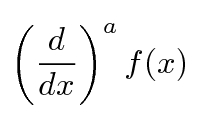
An important point is that the fractional derivative at a point x is a local property only when a is an integer; in non-integer cases we cannot say that the fractional derivative at x of a function f depends only on the graph of f very near x, in the way that integer-power derivatives certainly do. Therefore it is expected that the theory involves some sort of boundary conditions, involving information on the function further out. To use a metaphor, the fractional derivative requires some peripheral vision.
— Wikipedia on Fractional calculus
2010.04.30 Friday ACHK
The second superstring revolution was the intense wave of breakthroughs in string theory that took place approximately between 1994 and 1997.
The different versions of superstring theory were unified, as long hoped, by new equivalences. These are known as S-duality, T-duality, U-duality, mirror symmetry, and conifold transitions. The different theories of strings were also connected to a new 11-dimensional theory called M-theory.
New objects called branes were discovered as inevitable ingredients of string theory. Their analysis – especially the analysis of a special type of branes called D-branes – led to the AdS/CFT correspondence, the microscopic understanding of the thermodynamic properties of black holes, and many other developments.
— Wikipedia on Second superstring revolution
2010.04.28 Wednesday ACHK
 Physics Town
You must be logged in to post a comment.