The Many-worlds Interpretation is quite amazing, except the “Many” part.
— Me@2012-04-15 12:40:23 AM
2012.04.15 Sunday (c) All rights reserved by ACHK

The Many-worlds Interpretation is quite amazing, except the “Many” part.
— Me@2012-04-15 12:40:23 AM
2012.04.15 Sunday (c) All rights reserved by ACHK
嘗試出現 2
To borrow another bit of wisdom from Jason Roberts, this is a story about “luck surface area”. Given enough exposure, the impossibly lucky becomes the inevitable.
— How I Got a Job From a Hacker News Post
— February 28th, 2012 by Dave Wasmer
2012.04.15 Sunday ACHK
Single-world interpretation, 8
The interpretation based on consistent histories is used in combination with the insights about quantum decoherence. Quantum decoherence implies that irreversible macroscopic phenomena (hence, all classical measurements) render histories automatically consistent, which allows one to recover classical reasoning and “common sense” when applied to the outcomes of these measurements.
— Wikipedia on Consistent histories
2012.04.14 Saturday ACHK
Nothing in the world is more dangerous than sincere ignorance and conscientious stupidity.
— Martin Luther King Jr.
2012.04.14 Saturday ACHK
軟硬智力 5.2
這段改編自 2010 年 3 月 20 日的對話。
硬件缺失,為之「愚蠢」。軟件不足,為之「無知」。二選其一,就可以大大減弱,你「連繫意念」的能力。
人腦的軟件,即是知識才能,不足的話,可以「安裝」。如果你想使用的,是一個「應用程式」,「安裝」就相對簡單容易。例如,你要駕駛車輛的話,只要肯花時間,通常也會學得懂。
但是,如果你想「安裝」一個全新的「作業系統」,就相對複雜困難。最大的難處是,你不會真心願意那樣做。「安裝」全新的「作業系統」,代表你要改變沿用已久的思考習慣、更換視為當然的生活模式。
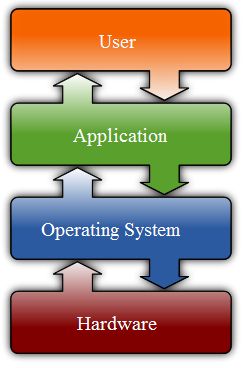 |
| By Golftheman (Own work) [CC-BY-SA-3.0], via Wikimedia Commons |
— Me@2012.04.14
2012.04.14 Saturday (c) All rights reserved by ACHK
To define causality, we need the concept of “before”.
So we need the concept of “simultaneity”.
In relativity, “simultaneity” is defined by the speed of light.
Therefore, “causality” is based on “the speed of light”.
— Me@2012-04-10 12:07:36 PM
2012.04.13 Friday (c) All rights reserved by ACHK
Future is a gas in the mind. Future is an explicit (coherent) superposition of eigenstates. Our mind is a coherent superposition of eigenstates.
— Me@2012-04-10 11:02:47 PM
2012.04.13 Friday (c) All rights reserved by ACHK
這段改編自 2010 年 6 月 2 日的對話。
15 個錢幣之中,有 3 個是金的。假設你要由那 15 個錢幣之中,抽 4 個出來,抽到 3 個金幣的機會率是多少?
已知整個過程是隨機的,即是抽中各個錢幣的機會均等。
這一題有兩種運算方法。
第一種運算方法,我稱之為「機會率方法」,簡稱「P」。
…
我現在解釋,使用「P 方法」時,為何在那四個分數之後,要乘多一個 4C3。(4C3 即是 「4 選 3」,等於 4。)
我剛才考慮,抽到「頭三個是金」和「尾一個非金」的機會率是多少?
(金)(金)(金)(X) = (3/15)(2/14)(1/13)(12/12)
但是,原本的題目並沒有規定 4 個錢幣之中,哪 3 個是金的,所以,我們還要用同樣的方法,思考其他的可能性:
(金)(金)(金)(X) = (3/15)(2/14)(1/13)(12/12)
(金)(金)(X)(金) = (3/15)(2/14)(12/13)(1/12)
(金)(X)(金)(金) = (3/15)(12/14)(2/13)(1/12)
(X)(金)(金)(金) = (12/15)(3/14)(2/13)(1/12)
只要把上面 4 個機會率加在一起,就是你要的最終答案。但是,那樣做會十分費時失事。有沒有快一點的做法呢?
有。只要利用一個簡單的觀察就可以。以上的 4 組數中的每一組,都是由 4 個分數相乘而成。雖然,例如,第一組的四個分數,並不同於第二組的那四個,但是,它們的分子,都是由那四個數「3、2、1、12」相乘而成的。唯一的分別,是次序不同。所以相乘以後,4 組數的數值是相同的。
(金)(金)(金)(X) = (72/32760)
(金)(金)(X)(金) = (72/32760)
(金)(X)(金)(金) = (72/32760)
(X)(金)(金)(金) = (72/32760)
既然是那樣,與其逐個運算,倒不如先計「(金)(金)(金)(X)」的機會率,然後乘以 4,直接獲取最終答案。
(3/15)(2/14)(1/13)(12/12)4 = 0.008791
那樣,為何我們會知道,總共只有 4 個排法?或者說,我們如何保證,沒有漏網之魚呢?
不同排法,代表那 3 個金幣,放於 4 格之中的不同位置。換句話說,你只需要思考,4 格之中放 3 個金幣,總共會有多少個方法。所以,答案是 4C3。 4C3 即是 「4 選 3」,等於 4。
(3/15)(2/14)(1/13)(12/12)4C3 = 0.008791
我現在只是令你理解,為何在那四個分數之後,要乘多一個 4C3。到你自己做題目時,毋須思考得那麼詳細。你只需要懂得這樣想就可以:
4 個錢幣中,有 3 個是金的,而題目又沒有規定是哪 3 個,所以,要乘多一個 4C3。
— Me@2012.04.13
2012.04.13 Friday (c) All rights reserved by ACHK
This position has lead him to face the following problem: if time is not part of the fundamental theory of the world, then how does time emerge? In 1993, in collaboration with Alain Connes, Rovelli has proposed a solution to this problem called the thermal time hypothesis. According to this hypothesis, time emerges only in a thermodynamic or statistical context. If this is correct, the flow of time is an illusion, one deriving from the incompleteness of knowledge.
— Wikipedia on Carlo Rovelli
2012.04.12 Thursday ACHK
Devastator
The team’s combined form of Devastator is brutality in its purest form — his sole purpose is to destroy anything and everything that gets in his way. It is ironic that the suitably intelligent Constructicons should sacrifice their thinking ability in their combined form, but simple-mindedness is a common limitation of the assorted other first-generation combining Transformers, because Devastator’s thoughts and actions are limited to what his six components can agree upon at any given time. Consequently, Devastator seems like a being of instinct, lashing out at everything around him before contemplating the consequences, but he is also slow and lumbering and very easy to trip up.
— Wikipedia on Constructicons
2012.04.12 Thursday ACHK
軟硬智力 5 | 無足夠資料 8
這段改編自 2010 年 3 月 20 日的對話。
(安:如果智力就是「連繫意念」的能力,理論上,一個人只要「連繫到意念」,就可以成為「智者」。那樣,為什麼各人的智力,會那麼參差呢?)
各人「連繫意念」的能力有別。「連繫意念」並不是一個「只要」。它並不是一個人人皆可立刻擁有的能力。
你彷彿正在問我,為何兩部電腦的性能功用,會有所不同。我會答,因為它們的硬件有分別、軟件有差距。
硬件缺失,為之「愚蠢」。軟件不足,為之「無知」。二選其一,就可以大大減弱,你「連繫意念」的能力。
— Me@2012.04.12
2012.04.12 Thursday (c) All rights reserved by ACHK
The Englert–Greenberger duality relation relates the visibility, V, of interference fringes with the definiteness, or distinguishability, D, of the photons’ paths in quantum optics. As an inequality:
D^2 + V^2 <= 1
The relationship was first experimentally shown by Greenberger and Yassin in 1988. It was later theoretically derived by Jaeger, Shimony, and Vaidman in 1995, and over a year later it was also mentioned by Englert, in 1996.
— Wikipedia on Englert–Greenberger duality relation
2012.04.11 Wednesday ACHK
… the people who made money from the gold rush were not the gold miners. It was guys named Levi Strauss and Crocker, and folks who ran banks, and people who sold jeans, and sold picks and axes.
I think ultimately in the long term that the money that will get made in Minecraft will not be about Minecraft, but will be about the services and products that get introduced into it. And so that’s what’s most interesting to me about Minecraft, is that the ecosystem, it’s almost an American history lesson.
— Rich Hilleman
— Getting EA Ready for the Future
— Brandon Sheffield
— Gamasutra
2012.04.11 Wednesday ACHK
這段改編自 2010 年 6 月 2 日的對話。
15 個錢幣之中,有 3 個是金的。假設你要由那 15 個錢幣之中,抽 4 個出來,抽到 3 個金幣的機會率是多少?
已知整個過程是隨機的,即是抽中各個錢幣的機會均等。
這一題有兩種運算方法。
…
第二種運算方法,我稱之為「統計學方法」,簡稱「S」。
這個方法,是直接用一個分數,來獲得答案。
(_)
( )
首先,你要想像,總共有多少個抽法:
15 個錢幣中抽 4 個,共有 15_C_4 種抽法,所以分母是 15_C_4。
(___ )
(15_C_4)
15_C_4 即是 「15 選 4」,等於 1365。
然後,你再想一想,在這 1365 個可能之中,有多少個是你想要的結果(其中三個金):
第一,你要巧合地從那 3 個金幣之中,抽到全部 3 個出來。那共有 3_C_3 種抽法。
第二,你要幸運地從那 12 個非金幣之中,抽到 1 個出來。那共有 12_C_1 個可能性。
所以,分子是〔(3_C_3)(12_C_1)〕。
(3_C_3)(12_C_1)
__________ = 0.008791
(15_C_4)
這個方法,是透過幾個「點算數目」來獲得答案,所以,我稱之為「統計學方法 S」。
「點算數目」的意思是,點算有多少個可能的結果,放在分母;然後,再點算眾多可能結果之中,有多少個是你想要的,放在分子。那樣,整個運算過程中,就不會出現多過一個分數。
因為「P 方法」和「S 方法」貌似截然不同,你幾乎沒有可能,錯在同一個地方。如果你用齊這兩個方法,都「竟然」計到同一個答案,你錯的機會就微乎其微。
據我現時所知,同時用 P、S 方法,不單是驗算機會率題目的最佳方法,而且是唯一方法。
機會率題目的好處是,如果你想得通,運算的步驟極少。即使你每一題機會率題目,也同時用這兩個方法運算,也不會花你太多時間。
— Me@2012.04.11
2012.04.11 Wednesday (c) All rights reserved by ACHK
種子意念 2.1.5
The Tractatus Logico-Philosophicus is an unusual example of a self-refuting argument, in that Ludwig Wittgenstein explicitly admits to the issue at the end of the work:
However, this idea can be solved in the sense that, even if the argument itself is self-refuting, the effects of the argument elicit understandings that go beyond the argument itself.
— Wikipedia on Self-refuting idea
2012.04.10 Tuesday ACHK
Binary-bonding
When connected with each other, the human or Nebulan and the Transformer essentially share a single mind and can work together seamlessly, but when separated from each other, both retain their individual minds and bodies. This allows for greater cooperation, and with twice the experience, a better understanding of possible combat or other dangerous situations. The binary-bonding process does not damage the body of either party, and both parties are able to carry on with their normal lives, but it does generate a permanent, irreversible bond between their minds. However, the Headmaster component can find themselves with increased strength.
The process does have a few weaknesses. Some partnerships on both sides suffer from issues partners have with one another. For example, Vorath is a scientist while his Decepticon partner, Mindwipe is a believer in the supernatural, leading the two to bicker over conflicting ideologies. Also, headless Transformers can be stuck in vehicle mode when the Headmaster component is separated.
— Wikipedia on Headmaster (Transformers)
— 2011.06.30
2012.04.10 Tuesday ACHK
軟硬智力 4 | Hardware designers 2
這段改編自 2010 年 3 月 20 日的對話。
In electronic systems and computing, firmware is a term often used to denote the fixed, usually rather small, programs and/or data structures that internally control various electronic devices.
There are no strict boundaries between firmware and software, as both are quite loose descriptive terms. However, the term firmware was originally coined to contrast with higher-level software which could be changed without replacing a computer hardware component.
— Wikipedia on Firmware
Also, when you are hardware designers, you have tremendously more discipline in writing and describing software because in hardware you cannot get it wrong.
— Bhatia
— Founders at Work
Software in small becomes hardware in big:
Part of your intelligence hardware
is your intelligence software installed when you were small.
— Me@2011.09.21
— Me@2012.04.10
2012.04.10 Tuesday (c) All rights reserved by ACHK
One consequence is that every observation can be thought of as causing the combined observer-object’s wavefunction to change into a quantum superposition of two or more non-interacting branches, or split into many “worlds”.
— Wikipedia on Many-worlds interpretation
That is incorrect.
Let’s consider the double-slit experiment. For simplicity, we regard the event “a person reads the device reading” as a classical event.
Before installing the measuring device, we do not know which slit a photon goes through. The photon state is in a superposition of eigenstates:
| photon > = a | left > + b | right >
(According to the meaning of probability, |a|^2 + |b|^2 = 1.) In other words, if we send enough such kind of photons through the double-slit apparatus, we get the interference pattern.
After installing the measuring device, we know which slit a photon goes through. According to the Copenhagen interpretation, when the photon passes through the double-slit apparatus, the photon-state “collapses” to one of the two eigenstates, such as | left >. However, a more accurate point of view is that, according to the quantum decoherence interpretation, the photon-and-device state becomes a superposition of a lot of eigenstates. Most of such eigenstates are corresponding to the macrostate of passing-through-the-left-slit, |left>_macro_state.
The above many-worlds-interpretation statement assumes that there is a |right>_macro_state.
It is true in a sense that, since the photon-and-device involves a lot of particles, there are so many eigen-microstates. Some are certainly corresponding to the |right>_macro_state.
It is false in a sense that the weighting of the |right>_macro_state is so small that such macrostate is not meaningful in a macroscopic context, for example:
| photon-and-device > = 10^23 |left>_macro_state + 0.001 |right>_macro_state + other possible macrostates
— Me@2012-04-07 11:03:12 AM
2012.04.09 Monday (c) All rights reserved by ACHK
電腦輪迴觀 4
.
Many “impossible” things are possible if there are more than one person, such as time travel (to see your younger self), eternal life, and Wikipedia.
— Me@2012.04.07
.
.
2012.04.09 Monday (c) All rights reserved by ACHK
這段改編自 2010 年 6 月 2 日的對話。
15 個錢幣之中,有 3 個是金的。假設你要由那 15 個錢幣之中,抽 4 個出來,抽到 3 個金幣的機會率是多少?
已知整個過程是隨機的,即是抽中各個錢幣的機會均等。
這一題有兩種運算方法。
第一種運算方法,我稱之為「機會率方法」,簡稱「P 」。
P 方法:
首先,假想有四個空格:
(_)(_)(_)(_)
然後,你要抽四個錢幣出來,逐一填滿那四個空格。為簡便起見,我們暫時先把題目改為:抽到「頭三個是金」和「尾一個非金」的機會率是多少?
(金)(金)(金)(X)
接著,你可以考慮,第一個抽到金幣的機會是多少。因為原本有 15 個錢幣給你抽,所以第一個分數的分母是 15。那 15 個錢幣中,有 3 個是你所要的金幣,所以第一個分數的分子是 3。結論是,第一個分數是 3/15。
(3/15)(金)(金)(X)
到你抽第二個錢幣時,只剩下 14 個,所以第二個分母是 14。那 14 個錢幣中,還有兩個是金的,所以第二個分子是 2。
(3/15)(2/14)(金)(X)
如此類推,你亦可以得到餘下的兩個分數。
(3/15)(2/14)(1/13)(12/12)
但是,原本的題目並沒有規定 4 個錢幣之中,哪 3 個是金的,所以,我們要乘 4C3 於剛才的那個中途答案之上,因為,4 個之中放 3 個金幣,共有 4C3 種放法。4C3 即是 「4 選 3」,等於 4。
(3/15)(2/14)(1/13)(12/12)4C3 = 0.008791
這個方法,是透過幾個「機會率分數」的相乘來獲得答案,所以,我稱之為「機會率方法 P」。
— Me@2012.04.09
2012.04.09 Monday (c) All rights reserved by ACHK
 Physics Town
You must be logged in to post a comment.