
Fixed stars

.

* Writers may be classified as meteors, planets, and fixed stars. A meteor makes a striking effect for a moment. You look up and cry “There!” and it is gone forever. Planets and wandering stars last a much longer time. They often outshine the fixed stars and are confounded by them by the inexperienced; but this only because they are near. It is not long before they must yield their place; nay, the light they give is reflected only, and the sphere of their influence is confined to their orbit — their contemporaries. Their path is one of change and movement, and with the circuit of a few years their tale is told. Fixed stars are the only ones that are constant; their position in the firmament is secure; they shine with a light of their own; their effect today is the same as it was yesterday, because, having no parallax, their appearance does not alter with a difference in our standpoint. They belong not to one system, one nation only, but to the universe. And just because they are so very far away, it is usually many years before their light is visible to the inhabitants of this earth.

o Vol. 2 “The Art of Literature” as translated in Essays and Aphorisms (1970), as translated by R. J. Hollingdale

– Arthur Schopenhauer

.

.

.

2010.06.06 Sunday ACHK
Monty Hall problem 1.4.3

Frequency probability and Bayesian probability, 3.2.3

機會率哲學 3.2.3

這段改編自 2010 年 4 月 3 日的對話。

既然是兩個不同的概念,我們何不索性賦予它們,兩個不同的名字。那就可以避免再混淆。我們可以把「頻率學派」的「機會率」,叫做「頻率機會率」、「客觀機會率」,或者「物理機會率」。然後,我們把「貝葉斯學派」的「機會率」,叫做「貝葉斯機會率」、「主觀機會率」,或者「知識機會率」。

(安:「頻率機會率」和「貝葉斯機會率」的分別作於,「頻率學派」認為,機會率的數值是客觀的,反映著被觀察系統的物理性質;而「貝葉斯學派」則認為,機會率的數值是主觀的,反映著觀察者對一個物理系統的知識多寡。

但是,既然「頻率機會率」和「貝葉斯機會率」都叫做「機會率」,即是它們有著密切的關係,共通的地方。正如,既然「紅蘋果」和「青蘋果」都是「蘋果」,即是它們有著很多相同的性質。那樣,我想問,「頻率機會率」和「貝葉斯機會率」的關係是什麼?有沒有可能把兩者統一起來?或者說,可不可以用同一個架構來處理它們呢?)

你的意思是,可不可以把「頻率機會率」和「貝葉斯機會率」視為,同一樣東西的兩個方面?

對於「機會率真義」這個問題,我的第二個解答,正正是企圖處理這個點。

「頻率機會率」和「貝葉斯機會率」衝突的來源,在於雙方也假設了,對於一個機會率問題,我們可以有把「觀察者」和「被觀察者」,百分百地截然分開。在這裡,「觀察者」即是「機會率使用者」;「被觀察者」即是「外在物理系統」。

如果視「觀察者」和「被觀察者」為兩個互不相干的系統,我們就可以爭論,究竟「機會率」是在描述「被觀察者」的性質,即是「物理性質」;還是在表達「觀察者」的性質,即是「知識多寡」。

但是,如果「可以把『觀察者』和『被觀察系統』完全分開」這個假設,根本不成立,我們就應該把「觀察者」,視為對應機會率系統的一部分。那樣,「觀察者的性質」就化成「系統性質」的一部分。

「觀察者」加「被觀察者」作為一個整體,作為一個單一系統的話,「機會率」就是那個大系統的性質。

This work is in the public domain in the United States, and those countries with a copyright term of life of the author plus 100 years or less.

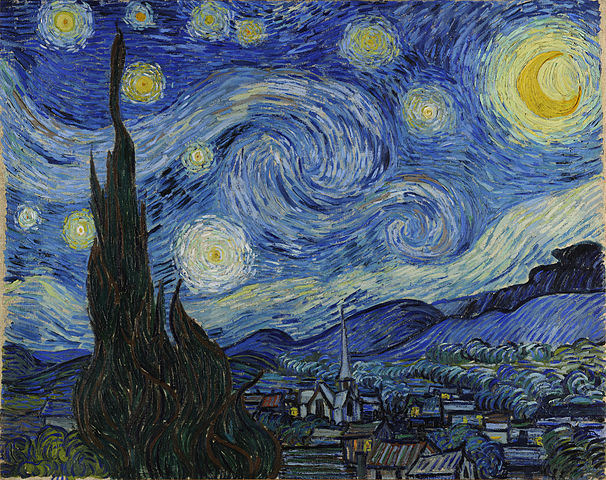
(安:假設梵高(Van Gogh)的一幅名畫,給一位有錢人甲,用一億元買下來。然後我們問,究竟那幅名畫的「價值」,是那幅畫本身的性質,還是有錢人甲的性質?

一方面,我們不可以說,那一億元的「價值」,純粹是那幅畫的性質,因為對於一個三餐不計的平民來說,「衣食豐足」遠勝過「一幅梵高大作」。甚至,他可能連「梵高」是誰,也不太知道。

另一方面,我們亦不可以說,那一億元的「價值」,純粹是那位有錢人甲的性質,因為對於甲來說,並不是任何一位畫家的任何一幅畫,都價值一億大元。)

— Me@2012.11.25

2012.11.25 Sunday (c) All rights reserved by ACHK

Superdeterminism 2.1

Paradox 9.2 | Bell’s theorem, 4.1

Bell’s theorem states that if Bell’s inequality is violated by experimental results, then the original quantum mechanics is correct in a sense that no local hidden variable theory is possible to replace it. Nature is either non-local or non-counterfactual-definite (or both).

1. The principle of locality:

There are two possible meanings of “locality” here.

1.1 The principle is correct in a sense that no causal influence can be faster than light.

1.2 The principle is incorrect in a sense that distant particles can be entangled. Correlation without causation can be instantaneous.

Assume that a pair of particles are entangled. Measuring one particle will collapse the wave function, which governs both particles, instantaneously.

2. Counterfactual definiteness:

2.1 It is correct in a sense that an object has a definite quantum state.

2.2 It is incorrect in a sense that, more often than not, the definite quantum state is not corresponding to a definite classical state (aka eigenstate). Instead, that quantum state is a superposition of different eigenstates. 

The meaning of the phrase “counterfactual definiteness” in quantum mechanics or Bell’s theorem is not the same as that in the superdeterminism theory. They are two different concepts.

— Me@2012-11-24 11:21:01 AM

2012.11.25 Sunday (c) All rights reserved by ACHK