Timetable for high school study 10.2

這段改編自 2010 年 2 月 7 日的對話。

.

Duration Subject
3 hours 理科
1 hour 語文
1 hour
3 hours 文科

另外一點是,在我每天的溫習時間表中,也必須要有語文科目,即是中文或英文。其他科目,你可以作短時期(例如三個月)的操練,令到成績有明顯的增長。但是,你要提升語文能力的話,一定要靠長年累月的,反覆運用才行。所以,你應該堅持每天也有,「溫習」語文的時間。而時間的長短,反而不是大問題。

那樣,應樣怎樣「溫習」語文科目呢?

一般人只會做教科書練習,和歷屆試題,然後再背一大堆文法規則等。那些都是必須要做的。但是,要大大提升語文修養的話,除了「必須品」以外,你還應該長年累月,「身處語文之中」。例如,我在中六(中學六年級)開始,要求自己每星期也,看一本書。第一個星期看,一本英文書;第二個星期,看一本中文書;第三個星期,看一本英文書;如此類推,不斷循環。而那些書一定要是,語文正確和內容深刻的。

— Me@2010.06.17

.

.

2010.06.18 Friday (c) All rights reserved by ACHK

反白論前傳:冠名篇

Stigler’s law of eponymy is a process proposed by University of Chicago statistics professor Stephen Stigler in his 1980 publication “Stigler’s law of eponymy”. In its simplest and strongest form it says: “No scientific discovery is named after its original discoverer.” Stigler attributes its discovery to sociologist Robert K. Merton (which makes the law self-referencing).

— Wikipedia on Stigler’s law of eponymy

2010.06.17 Thursday ACHK

歷史 2

.

Time dissipates to shining ether the solid angularity of facts.

— Ralph Waldo Emerson

.

.

歷史,是凝固了的時間。

— Me@2010.06.16

.

.

.

2010.06.17 Thursday copyright ACHK

大學的感覺 2.2

本科研究院 2.2

(安:那樣,即是我的講法是正確的。如果想做「大學者」,要先走入一個「學術圈子」。而最容易入到「學術圈子」的方法是,讀大學/研究院課程。)

正是。如果我繼續讀「博士課程」的話,我的主要目的不會是「拿博士學位」,而會是「結識一大班『學術朋友/同事』」。

(安:但是,如果現在為了加入一個「學術圈子」,而再報讀「大學/研究院課程」的話,對我來說,時間成本 和 金錢成本 實在太大。)

所以,你可以退而求其次,由「寫網誌」開始,從事你的學術活動。你的網誌可以吸引到一些與你志同道合的讀者。那樣,你就可以在電腦虛擬世界中,創造你的「學術圈子」。

— Me@2010.06.16

2010.06.17 Thursday (c) All rights reserved by ACHK

Physics

* There is a theory which states that if ever anyone discovers exactly what the Universe is for and why it is here, it will instantly disappear and be replaced by something even more bizarre and inexplicable.

There is another theory which states that this has already happened.

— The Restaurant at the End of the Universe

— Douglas Adams

2010.06.16 Wednesday ACHK

Timetable for high school study 10.1

這段改編自 2010 年 2 月 7 日的對話。

.

我把數學成份比較多的科目,簡稱為「理科」;而文字成份比較多的科目,則簡稱為「文科」。

如果同一天的溫習時間,完全用在理科,或者完全用在文科身上的話,腦子會很辛苦。但是,由於理科和文科是,用腦部的不同部分去處理,如果我在同一天中,只用一部分的時間讀文科,而另一部分,則去讀理科的話,腦部的不同部分,就可以輪流休息。

Duration Subject
3 hours 理科
1 hour
3 hours 文科

還有,我用語文科目隔開,頭三小時和尾三小時,那就更加輕盈。

Duration Subject
3 hours 理科
1 hour 語文
3 hours 文科

然後,我再用晚餐隔開,頭四小時和尾三小時。

Duration Subject
3 hours 理科
1 hour 語文
1 hour
3 hours 文科

相比起連續七小時溫習同一科,我這個時間表,沒有那麼嚇人,正常的地球人,也會接受到。

— Me@2010.06.15

.

「半小時方法」詳情刊載於:

Half an Hour 2

Half an Hour 1

Timetable for high school study

請用本網誌左/右上角的搜尋器搜尋。

— Me@2010.05.22

.

.

2010.06.16 Wednesday (c) All rights reserved by ACHK

大腦程式員 5

“What really is the point of trying to teach anything to anybody?”

This question seemed to provoke a murmur of sympathetic approval from up and down the table.

Richard continued, “What I mean is that if you really want to understand something, the best way is to try and explain it to someone else. That forces you to sort it out in your mind. And the more slow and dim-witted your pupil, the more you have to break things down into more and more simple ideas. And that’s really the essence of programming. By the time you’ve sorted out a complicated idea into little steps that even a stupid machine can deal with, you’ve learned something about it yourself.”

— Douglas Adams

2010.06.15 Tuesday ACHK

Russell | Einstein

.

Great spirits have always encountered violent opposition from mediocre minds. The mediocre mind is incapable of understanding the man who refuses to bow blindly to conventional prejudices and chooses instead to express his opinions courageously and honestly.

* Letter to Morris Raphael Cohen, professor emeritus of philosophy at the College of the City of New York, defending the appointment of Bertrand Russell to a teaching position (19 March 1940).

— Albert Einstein

.

.

.

2010.06.15 Tuesday ACHK

大學的感覺 2

本科研究院 2

(安:我自己最想做的,可能是「學者」,雖然以我現在的年紀(30),可能已經不是太適合。)

我覺得這個不是問題。只要你開始「寫網誌」的話,你已經是一個「學者」。如果你寫一些有學術成份、有價值、而又有讀者的文章,那你就已經是一個「學者」。你的文章質素越高,讀者就越多。讀者足夠多的話,你可以再整理你的網誌,將它輯錄成書。在你的履歷表,你就可以列出你的書籍著作。那樣,你就變成了一個「真正的學者」。

(安:但是有一個問題。作為一個「學者」,除了「愛恩斯坦」那類人外,如果要「學有所成」,做到大研究的話,一定要先走入一個「圈子」。而那一個「圈子」之內,一定要有一些在該門學問中,傑出的人物,可以和你作「精神武功較量」(intellectual interactions)。)

愛恩斯坦並不是如大眾印象中,是百分百的「獨行俠」。其實,他有一班「學術朋友」,不斷和他「切磋武功」。

(安:那樣,即是我的講法是正確的。如果想做「大學者」,要先走入一個「學術圈子」。而最容易入到「學術圈子」的方法是,讀大學/研究院課程。)

正是。如果我繼續讀「博士課程」的話,我的主要目的不會是「拿博士學位」,而會是「結識一大班『學術朋友/同事』」。

— Me@2010.06.14

2010.06.15 Tuesday (c) All rights reserved by ACHK

Physicists’ mathematics

Physicists are coming up with lots of exciting mathematical “results” – often NOT rigorously proved! – and mathematicians are getting very interested.

— John Baez

2010.06.14 Monday ACHK

各自修行

這段改篇自 2010 年 2 月 7 日的對話。

(LWT:是不是不應和別人一同溫習?)

討論問題時,自然會在一起。但是,到你們要集中精神思考時,就應該「各自修行」。

(LWT:即是「討論」不算是「溫習/思考」?)

無錯。試想想,你在考試時,是一個人做一份試卷,還是幾個人合力做一份呢?

(LWT:一個人。)

正正是因為這樣,你在平時溫習時,就應該為考試而「採排」,多加訓練自己「獨立思考」的能力。

— Me@2010.06.13

2010.06.14 Monday (c) All rights reserved by ACHK

大學的感覺

本科研究院

(安:我發覺我大學本科時所讀的東西,對我的人生,沒有什麼重要性。我也沒有期望過,我的大學本科,對我有很大的作用。但是,我卻估不到它對我的作用近乎零。)

那你的問題是什麼?

(安:問題是,「大學階段」過了的話,就很難回頭。當然,理論上是可以回頭的。但是,回頭的話,就已經不再是那回事。例如,理論上,我可以現在報讀另一個「學士課程」,或者是報讀一個「碩士課程」。但是,過了那個年紀(19 – 22),那就好像不再是「大學的感覺」。

還有,我開始覺得「大學本科/學士課程」是一個「找工作套餐」;「研究院/博士課程」是一個「找大學教席的套餐」;而「研究院/碩士課程」就介乎兩者之間。我的意思是,「讀大學本科」的目的是為了「找工作」;「讀博士課程」的目的是為了「做教授」。)

那你想解決的是什麼問題?

(安:即是話,如果我決定了脫離「打工(受僱)」的行列,我就沒有需要讀「大學本科」。)

這是重點。Blogger 和 Twitter 的創辦人 Evan Williams,年輕時想:「讀大學的目的是為了『找工作』,但是我沒有打算『受僱於人』,所以我沒有需要讀大學。」結果,他真的沒有讀大學。他的電腦知識,絕大部分是自學回來的。

— Me@2010.06.12

2010.06.13 Sunday (c) All rights reserved by ACHK

Einstein field equations


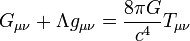
Einstein’s equation in plain English:

Given a small ball of freely falling test particles initially at rest with respect to each other, the rate at which it begins to shrink is proportional to its volume times: the energy density at the center of the ball, plus the pressure in the x direction at that point, plus the pressure in the y direction, plus the pressure in the z direction.

— John Baez

2010.06.12 Saturday ACHK

Pianist

.

An expert pianist can play notes faster than the brain can send signals to his hand. Likewise an artist, after a while, can make visual perception flow in through his eye and out through his hand as automatically as someone tapping his foot to a beat.

— Paul Graham

.

.

.

2010.06.12 Saturday ACHK

讀書與睡眠

這段改篇自 2010 年 2 月 7 日的對話。

(LWT:我有有關睡眠的問題。如果要溫了書的話,就會很晚才可以睡。所以我會想,究竟應該溫了書才睡,還是早點睡,第二天才早起來溫習?)

個個人也不同。你應該做實驗:兩個方法也試一試,看看哪一個對你比較好。

(LWT:但是呢 … 早睡的話,可能第二天早上仍然不能早起。結果都是沒有溫習。)

所以我說「個個人也不同」。你一定要做實驗才知道。例如,我中學時期(1998),當企圖早起溫習時,次次都會失敗。所以,我後來放棄了「早起大計」,每晚也溫完書才睡。兩年多前(2007),我重新讀書時,因為日間要上班,晚上回家後實在十分疲倦,不能集中精神溫習,唯有每天早上四時起來溫習。

(LWT:為什麼你那時就可以早起呢?)

比喻說,一個人當生命安全受到威脅時,就什麼事情也可以做到。

那時,我沒有其他選擇。如果不早起的話,就完全沒有時間溫習。那樣,「我要得到一個物理學位」的夢想就要放棄。

— Me@2010.06.11

2010.06.12 Saturday (c) All rights reserved by ACHK

Renormalization

In quantum field theory, the statistical mechanics of fields, and the theory of self-similar geometric structures, renormalization refers to a collection of techniques used to take a continuum limit.

When describing space and time as a continuum, certain statistical and quantum mechanical constructions are ill defined. To define them, the continuum limit has to be taken carefully.

— Wikipedia on Renormalization

2010.06.11 Friday ACHK