這段改編自 2010 年 6 月 9 日的對話。
背誦公式時,不能單靠直接的背誦。你還要透過做大量的題目練習,才能有長久的記憶,因為題目有上文下理,你會知道什麼時候,應該用什麼公式。只是憑空背誦公式,是沒有用的。
— Me@2012.09.18
2012.09.18 Tuesday (c) All rights reserved by ACHK

這段改編自 2010 年 6 月 9 日的對話。
背誦公式時,不能單靠直接的背誦。你還要透過做大量的題目練習,才能有長久的記憶,因為題目有上文下理,你會知道什麼時候,應該用什麼公式。只是憑空背誦公式,是沒有用的。
— Me@2012.09.18
2012.09.18 Tuesday (c) All rights reserved by ACHK
Ability is not fixed, but potential, which means the maximum possible ability, is fixed, almost.
— Me@2011.10.31
2012.08.02 Thursday (c) All rights reserved by ACHK
X is meaningful
= You can keep developing X
= X always has next steps
1. If you have a lot of good intellectual and social connections, you can keep having the next steps.
2. Action is a good way to create the next steps and decrease uncertainties.
— Me@2012.05.14
2012.07.10 Tuesday (c) All rights reserved by ACHK
One’s intelligent hardware cannot be changed, almost.
What I can do to provide the best intelligent software for one’s existing intelligent hardware.
— Me@2011.10.18
2012.06.16 Saturday (c) All rights reserved by ACHK
軟硬智力 7.1.3
.
How to answer this kind of questions:
Why am I so stupid?
It is not a valid question. It is not the case that there is a pre-existing “I”, to which we can assign some qualities such as stupidity. Instead, I am the sum of all my qualities, including the quality of being stupid.
— Me@2011.10.18
.
This kind of questions are like
Why does a triangle have three angles?
To be not stupid, the correct approach should be,
I am stupid. So I have to change my ‘I’ in order to be not stupid.
Although you cannot change the number of angles of a triangle, you can change the figure itself, replacing it with a rectangle.
— Me@2011.10.18
.
.
2012.06.14 Thursday (c) All rights reserved by ACHK
軟硬智力 7.1.2
.
How to answer this kind of questions:
Why am I so stupid?
It is not a valid question. It is not the case that there is a pre-existing “I”, to which we can assign some qualities such as stupidity. Instead, I am the sum of all my qualities, including the quality of being stupid.
— Me@2011.10.18
.
If you do not believe me, imagine who am “I”, without all my qualities.
In other words, after deleting all my qualities, what would remain for “I”?
— Me@2011.10.18
.
.
2012.06.12 Tuesday (c) All rights reserved by ACHK
軟硬智力 7.1
.
How to answer this kind of questions:
Why am I so stupid?
It is not a valid question.
It is not the case that there is a pre-existing “I”, to which we can assign some qualities such as stupidity.
Instead, I am the sum of all my qualities, including the quality of being stupid.
— Me@2011.10.18
.
.
2012.06.03 Sunday (c) All rights reserved by ACHK
數學教育 2.2 | 種子意念 2.1.7
You cannot teach a man anything, you can only help him to find it for himself.
– Galileo
知識不能傳授,只能靠學生自己發現創造。
老師的角色是引發思考,加速發現創造。
— Me@2011.10.18
What I cannot create, I do not understand.
— On his blackboard at time of death in 1988
— Richard Feynman
Whatever created has context.
So it is difficult to misunderstand or forget.
— Me@2011.10.18
2012.05.30 Wednesday (c) All rights reserved by ACHK
Feynman’s Blackboard, 3
You don’t truly understand it until you think it’s obvious.
— Chris Oliver
This is akin to how a society comes to understand something and why genius ideas sometimes take so long to become accepted. I believe “context” is the underlying principle here.
Arthur Schopenhauer said, “All truth passes through three stages: First, it is ridiculed; Second, it is violently opposed; Third, it is accepted as self-evident.”
If you present a truth to someone whom doesn’t have sufficient context for what you are saying, it may seem outrageous and ridiculous to them because the gap between their understanding and the insight you presenting is too great.
They would have to build up their understanding of the context around it until it expands to a point where they find a connection to what they already know. Then they can start to relate to it and eventually they may see it as self evident.
— espeed 254 days ago
— Hacker News
2012.04.26 Thursday ACHK
這段改編自 2010 年 3 月 20 日的對話。
留意,這個「軟硬智力」比喻,不可用得太盡,因為,「人腦硬件」和「電腦硬件」,有一個核心的分別。
人腦的軟件是思想。人腦的硬件是一大堆腦細胞,即是「神經元細胞」。人腦可以通過增加和增強神經元細胞之間的聯繫,來提升運作效能。電腦的硬件則不會自我改變。改進電腦硬件的唯一方法是,把它更換掉。
— Me@2012.04.22
2012.04.22 Sunday (c) All rights reserved by ACHK
軟硬智力 5.5
這段改編自 2010 年 3 月 20 日的對話。
(安:根據你剛才的比喻,「硬件」代表腦部本身,「軟件」代表腦部中的思想。而你現在講,「韌體」是「軟件」的其中一種。那樣,你想用「韌體」這個概念,來比喻哪一類思想呢?)
「作業系統」代表「思考習慣」和「生活模式」。你試想一想,有什麼思想,比「思考習慣」和「生活模式」更加頑固?
那一類思想,就可以比喻成「韌體」。
如果「作業系統」代表「思考模式」,「韌體」大概可以指「思考傾向」。「思考傾向」可以說是來自於「潛意識」。但是,「潛意識」這個用語在這裡,未必有大意義,因為,我只是把自己腦中思想的未知部分,統稱為「潛意識」罷了。到頭來,「潛意識」是什麼,或者「潛意識」從何以來,仍然是一個未知之數,仍然需要另外的考究。
(安:我又不覺得,那完全是一個未知項。你已經把「潛意識」,解釋成「思考傾向的來源」。那就不算是完全未知。還有,既然你已經把「潛意識」比喻成「韌體」,何不從這個方向追究,「潛意識」如何形成?)
— Me@2012.04.20
2012.04.20 Friday (c) All rights reserved by ACHK
軟硬智力 5.4
這段改編自 2010 年 3 月 20 日的對話。
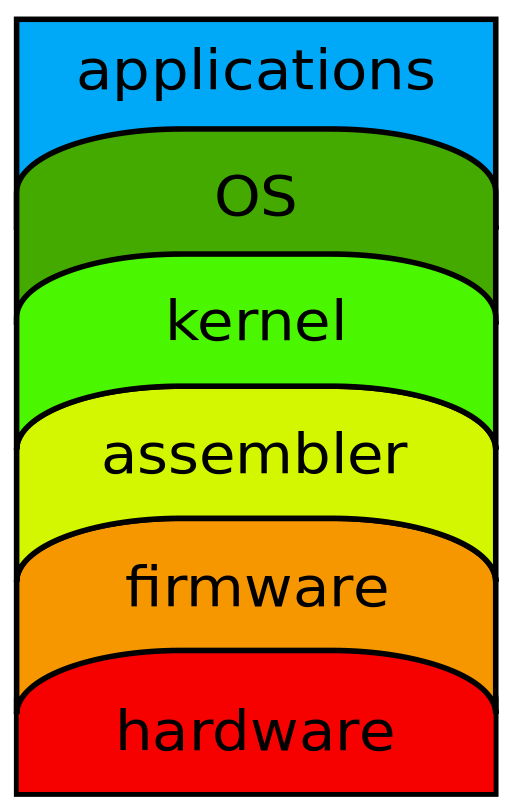
在電腦中,「firmware」(韌體/固件)是軟件的一種。一般的軟件,無論是「應用程式」,還是「作業系統」,都是儲存在硬碟之內。但是,「韌體」卻是儲存於,個別硬件(hardware)自己的晶片之內,負責該個硬件本身的運作。例如,主機板(motherboard)的韌體,是晶片內的程式,負責主機板和其他硬體(hardware)的銜接和溝通。
 |
| This file is licensed under the Creative Commons Attribution-Share Alike 3.0 Unported license. Author: Appaloosa |
又例如,顯示卡晶片內的程式,負責顯示卡本身和其他硬體(主要是中央處理器與顯示屏)的訊息往來。
因為韌體不是儲存於硬碟(hard disk drive)內,更改韌體,比起更改「作業系統」,還要困難得多。你說要「更改韌體」,和你說要「更換硬件」,意思其實差不多,因為「更改韌體」的最快捷方法是,直情把該個硬件換掉。例如,如果你電腦的顯示卡表現不佳,你會聯想到,可能需要安裝一張較強的顯示卡。但是,你大概不會考慮,不如先升級顯示卡內的程式(韌體),看看能否提升效能。
(安:根據你剛才的比喻,「硬件」代表腦部本身,「軟件」代表腦部中的思想。而你現在講,「韌體」是「軟件」的其中一種。那樣,你想用「韌體」這個概念,來比喻哪一類思想呢?)
— Me@2012.04.18
2012.04.18 Wednesday (c) All rights reserved by ACHK
軟硬智力 5.3
 |
| By Miko3k, Tene, Fri13 [GFDL or CC-BY-SA-3.0], via Wikimedia Commons |
2012.04.16 Monday ACHK
軟硬智力 5.2
這段改編自 2010 年 3 月 20 日的對話。
硬件缺失,為之「愚蠢」。軟件不足,為之「無知」。二選其一,就可以大大減弱,你「連繫意念」的能力。
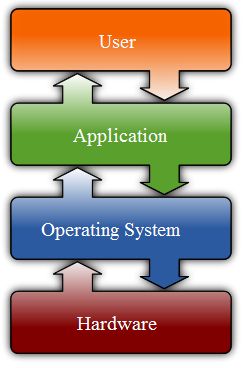
人腦的軟件,即是知識才能,不足的話,可以「安裝」。如果你想使用的,是一個「應用程式」,「安裝」就相對簡單容易。例如,你要駕駛車輛的話,只要肯花時間,通常也會學得懂。
但是,如果你想「安裝」一個全新的「作業系統」,就相對複雜困難。最大的難處是,你不會真心願意那樣做。「安裝」全新的「作業系統」,代表你要改變沿用已久的思考習慣、更換視為當然的生活模式。
 |
| By Golftheman (Own work) [CC-BY-SA-3.0], via Wikimedia Commons |
— Me@2012.04.14
2012.04.14 Saturday (c) All rights reserved by ACHK
軟硬智力 5 | 無足夠資料 8
這段改編自 2010 年 3 月 20 日的對話。
(安:如果智力就是「連繫意念」的能力,理論上,一個人只要「連繫到意念」,就可以成為「智者」。那樣,為什麼各人的智力,會那麼參差呢?)
各人「連繫意念」的能力有別。「連繫意念」並不是一個「只要」。它並不是一個人人皆可立刻擁有的能力。
你彷彿正在問我,為何兩部電腦的性能功用,會有所不同。我會答,因為它們的硬件有分別、軟件有差距。
硬件缺失,為之「愚蠢」。軟件不足,為之「無知」。二選其一,就可以大大減弱,你「連繫意念」的能力。
— Me@2012.04.12
2012.04.12 Thursday (c) All rights reserved by ACHK
軟硬智力 4 | Hardware designers 2
這段改編自 2010 年 3 月 20 日的對話。
In electronic systems and computing, firmware is a term often used to denote the fixed, usually rather small, programs and/or data structures that internally control various electronic devices.
There are no strict boundaries between firmware and software, as both are quite loose descriptive terms. However, the term firmware was originally coined to contrast with higher-level software which could be changed without replacing a computer hardware component.
— Wikipedia on Firmware
Also, when you are hardware designers, you have tremendously more discipline in writing and describing software because in hardware you cannot get it wrong.
— Bhatia
— Founders at Work
Software in small becomes hardware in big:
Part of your intelligence hardware
is your intelligence software installed when you were small.
— Me@2011.09.21
— Me@2012.04.10
2012.04.10 Tuesday (c) All rights reserved by ACHK
通情方能達理
— Me@2012-03-29 11:34:14 AM
2012.04.02 Monday (c) All rights reserved by ACHK
連繫智力 2.3
這段改編自 2010 年 3 月 20 日的對話。
智力的高低,無論從「軟件」還是「硬件」方面看,都是取決於網絡的疏密。
軟件網絡:
如果你吸收了充足的知識,而又能夠將它們融會貫通,形成一個精密的意念網絡的話,你的思考速度就會足夠高。你的愚蠢程度,就會相當有限。
硬件前言:
人的大腦是沒有 CPU(中央處理器)的。
人的思考,是靠大腦中的神經細胞。那些神經細胞,叫做「神經元」。
個別的神經元是沒有意識的。神經元之間互相連繫,互相溝通,形成一個複雜的神經元網絡。正如很多電話透過電話線,形成電話網絡一樣。人的思考意識,來自這個神經元網絡。
智力越高,代表神經元之間的連繫越多,網絡越複雜;專長越專,代表個別連繫路線的頻寬高,導致某一組神經元之間,可以有高速的訊息傳遞。
硬件網絡:
如果你大腦眾多神經元之間,有著充足的連繫,而個別的路線,又強大寬闊的話,你的大腦,就擁有一個精密而高速的神經元網絡。換而言之,你的思考速度就會足夠高。你的愚蠢程度,就會相當有限。
那樣,有什麼方法,可以增多和增強,神經元之間的連繫呢?
— Me@2008.02.06
— Me@2012.03.30
2012.03.30 Friday (c) All rights reserved by ACHK
網絡記憶 2 | Feynman’s Blackboard, 2
連繫意念,是「釐清意念」和「記憶意念」的最佳方法。
而創造,就是意念的連繫。
所以,任何你透過「教學」或者「寫作」表達過的東西,你都不會忘記。
— Me@2012.03.28
2012.03.28 Wednesday (c) All rights reserved by ACHK
無足夠資料 7.2 | 西瓜 4
無知 (matters of facts) 綜合句
要去除無知,就要博覽群書,看破紅塵,以獲取充足的思考材料。
愚蠢 (relations of ideas) 重言句
要刪減愚蠢,就要連繫意念,融會貫通,以建構高速的思考網絡。
— Me@2012.03.26
2012.03.26 Monday (c) All rights reserved by ACHK
 Physics Town
You must be logged in to post a comment.