— Me@2025-03-08 11:07:02 PM
.
.
2025.03.08 Saturday (c) All rights reserved by ACHK

— Me@2025-03-08 11:07:02 PM
.
.
2025.03.08 Saturday (c) All rights reserved by ACHK

— Me@2025-01-16 12:13:51 PM
.
.
2025.01.16 Thursday (c) All rights reserved by ACHK
90-CE-PHY II – 18 前傳 2
.
— Me@2024-12-21 11:41:50 AM
.
.
2024.12.21 Saturday (c) All rights reserved by ACHK
90-CE-PHY II – 18 前傳 1
.
.
.
2024.10.22 Tuesday (c) All rights reserved by ACHK
失傳記 | 無足夠資料 13
.
他已退休。
為什麼我那麼肯定呢?
原因是,我竟然可以租到,他團隊的原官方網址。
即使當年他仍在任教時,在網上也不會找到,他的真正身份。他懂網絡極端隱身術。那是魔法。所以,不要浪費時間找他了。
.
我相信暫時沒有人,可以替代他。而他既未有官方傳人,亦無教學的文字或影片紀錄。那就意味著,他的物理絕學,將會失傳。那格外可惜。
想當年,如果沒有他的教導,我大概不能升學,因為,在遇到他之前,我的物理題目,近乎完全不懂。那時,我的日校物理老師甲,只會講精采的故事,少有研究技術細節。亦即是話,甲不會跟我們,詳細研究考試題目。我那時不知道,日校老師甲有那問題。直到幾年後的中學同學聚會時,有一個師弟提起,我才知道。
他說,給甲教完,會不懂做題目。那時我才發現,原來「物理題目近乎完全不懂」,並不是我的責任。
.
為免 Ken Chan 絕學失傳,在下略盡綿力,製作了力學課程。
歡迎免費學習,無限重溫。稍後頻道略有所成時,定必考慮繼續,製作其他課題。
— Me@2024-08-09 01:32:16 PM
.
.
2024.08.09 Friday (c) All rights reserved by ACHK
我不是 Ken Chan,而是他九十年代的學生。
以下是本人的履歷、廣告及聯絡表格:
— Me@2023-07-16 11:13:19 PM
.
本站物理頻道:
— Me@2023-10-13 10:07:40 AM
.
.
2023.07.17 Monday (c) All rights reserved by ACHK
92-CE-PHY II – 4 前傳 2
.
.
.
2023.05.20 Saturday (c) All rights reserved by ACHK
The Jacobian of the inverse of a transformation is the inverse of the Jacobian of that transformation
.
In this post, we would like to illustrate the meaning of
the Jacobian of the inverse of a transformation = the inverse of the Jacobian of that transformation
by proving a special case.
.
Consider a transformation 


By definition, the Jacobian matrix J of 
.
Now we consider the the inverse of the transformation
By definition, the Jacobian matrix 

.
On the other hand, the inverse of Jacobian 
.
If 
Let’s try to prove that.
.
Consider equations
Differentiate both sides of each equation with respect to 
.
.

results
…
— Me@2018-08-09 09:49:51 PM
.
.
2018.08.09 Thursday (c) All rights reserved by ACHK
Consider the curve 
.


In order words, it means the slope of the tangent of the curve 
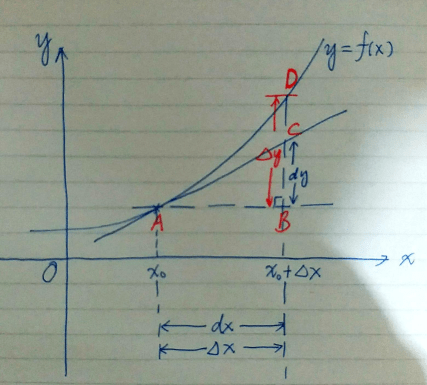
The symbol 

.
The symbol 


or
.
The relationship of 
.
Similarly, for functions of 2 variables:
.
For functions of 3 variables:
— Me@2018-07-15 09:30:29 PM
.
.
2018.07.15 Sunday (c) All rights reserved by ACHK
Multiple Choices 6
這段改編自 2010 年 8 月 24 日的對話。
.
有時,一題物理 MC(多項選擇題)會,同時有數學做法和物理做法。
那時,你就先用物理方法做一次,再用數學方法做多一次,以作驗算。
(問:哪有那麼多的時間?)
之前講過,那些做法,必須透過考試前,平日多加收集和練習而來;並不是在考試中途,才花額外時間發明。
— Me@2018-05-22 06:02:40 PM
.
.
2018.05.22 Tuesday (c) All rights reserved by ACHK
Whether 

.
In the ideal gas equation derivation, the volume used in the equation refers to the volume that the gas molecules can move within. So
Then, when deriving the pressure, it is assumed that there are no intermolecular forces among gas molecules. So
.
These are the reasons that
—
— Me@2018-05-16 07:12:51 PM
~~~
… the thing to keep in mind is that the “pressure we use in the ideal gas law” is not the pressure of the gas itself. The pressure of the gas itself is too low: to relate that pressure to “pressure for the ideal gas law” we have to add a number. While the volume occupied by the real gas is too large – the “ideal volume” is less than that. – Floris Sep 30 ’16 at 17:34
— Physics Stackexchange
.
.
2018.05.16 Wednesday (c) All rights reserved by ACHK
Why do we add, and not subtract, the correction term for pressure in [Van der Waals] equation?
Since the pressure of real gases is lesser than the pressure exerted by (imaginary) ideal gases, shouldn’t we subtract some correction term to account for the decrease in pressure?
I mean, that’s what we have done for the volume correction: Subtracted a correction term from the volume of the container V since the total volume available for movement is reduced.
asked Sep 30 ’16 at 15:20
Ram Bharadwaj
— Physics Stackexchange
.
Ideal gas law:
However, since in a real gas, there are attractions between molecules, so the measured value of pressure P is smaller than that in an ideal gas:
Also, since the gas molecules themselves occupy some space, the measured value of the volume V is bigger that the real gas really has:
—
If we substitute 

So in order to maintain the equality, a correction term to the pressure must be added:
—
If we substitute 
So in order to maintain the equality, a correction term to the pressure must be subtracted:
.
In other words,
— Me@2018-05-13 03:37:18 PM
.
Why? I still do not understand.
.
How come
but

.
How come
but

— Me@2018-05-13 03:22:54 PM
.
The above is wrong.
The “real volume” 
One is “the volume occupied by a real gas”. In other words, it is the volume of the gas container.
Another is “the volume available for a real gas’ molecules to move”.
.
To avoid confusion, we should define
.
Or even better, avoid the terms 


Whether
…
— Me@2018-05-13 04:15:34 PM
.
.
2018.05.13 Sunday (c) All rights reserved by ACHK
這段改編自 2015 年的對話。
.
我的相對論教授說,所謂

在某些意思之下,沒有那麼特別,因為,你可以把它看成,貨幣的兌換。
.
能量 =(光速二次方)
.
1 美元 
.
公式中的 
(而光速 c,則是時間和空間的兌換率。)
— Me@2018-05-11 09:10:00 PM
.
.
2018.05.11 Friday (c) All rights reserved by ACHK
For convenience, I assume that the rod OP is horizontal.
1. Remember, current (positive charges) moves from high potential to low potential outside a battery, but it moves from low potential to high potential inside the battery.
2. An induced emf is a kind of battery. That is why it is called “induced emf”, not “induced potential difference”.
3. Right Hand Rule:
Motion –> downwards
B-field –> into the paper
So
current –> O to P
Then, P is at a higher potential.
4. Left Hand Rule:
Imagine you are a positive charge within the rod. The whole rod moves downloads. So you (the positive charge) move downloads.
current –> downloads
B-field –> into the paper
Therefore, you, as the positive charge, experience a force, pointing to the right. So the induced emf is pointing to the right.
Inside a battery, the direction of the emf is pointing from low potential to high potential. Thus, P is at a higher potential.
— Me@2014-03-19 01:54:04 PM
2014.04.29 Tuesday (c) All rights reserved by ACHK
這段改編自 2014 年 3 月 22 日的對話。
假設有 7 個蘋果,你要選 3 個出來,總共有多少個選法?
…
總括而言,「7P3/(3!)」、「7P2 x 5P1/(3!)」和「7C3」都是正確的,等如 35。而「7C2 x 5C1」則等如 105,不是正確的。
…
(A: 那為什麼把「7P3」拆成「7P2 x 5P1」就可以?那不會「暗地裡加了次序」嗎?)
因為 nPr 根本不是講「組合」,而是講「排列」,本身就要重視次序。
如果你要百分百地通透理解,這一題的運作原理,你不妨試試重組案情 —— 用最原始的方法去思考和運算,而不用排列(nPr)和組合(nCr)的公式。
7 個蘋果中選 3 出來,即是相當於有 3 個格子要填滿:
(_)(_)(_)
第一格有 7 個選擇:
(7)(_)(_)
第二格則有,餘下的 6 個可能性:
(7)(6)(_)
如此類推:
(7)(6)(5)
這代表了 7 個蘋果抽 3 個出來排隊的話,有多少個排列方法(permutation)。但是,現在重視的是組合(combination),而不是排列。亦即是話,重要的是,你究竟要在那 7 個蘋果之中,選了哪 3 個出來。至於它們 3 個之中,哪一個先被選出、哪一個後被選出,並不重要。
所以,你應該把剛才的中途答案,除以(3!),因為,被選的 3 個蘋果,內部總共有(3!)種排列方法。
3! = 6
那 6 個「排列」,都應歸類為,同一個「組合」 。
(7)(6)(5)
—————-
(3!)
= 35
至於你把這「原始式子」,看成「7P3/(3!)」、「7P2 x 5P1/(3!)」,還是「7C3」,則沒有所謂,因為,你把它們之中的任何一個拆開,都同樣會得到這「原始式子」。
如果你任何「數學科技」也不喜歡,而想再原始一點,直情(乾脆)連「階乘公式」(n!)都不用的話,你可以自行推斷一下,已選了的那 3 個蘋果之中,內部會有多少個排列方法。
那其實就相當於,已知有 3 個人入了總決賽,爭奪冠亞季軍,然後問,總共有多少個,可能的比賽結果?
你可以這樣想,冠亞季有 3 個席位:
(_)(_)(_)
第一格有 3 個選擇:
(3)(_)(_)
第二格則有,餘下的兩個可能性:
(3)(2)(_)
如此類推:
(3)(2)(1)
所以,那 3 個蘋果的內部,總共有(3)(2)(1),即是 6 個排列方法。那 6 個排列,都應歸類為是同一個組合。
(7)(6)(5)
—————-
(3)(2)(1)
= 35
至於你把這「原始式子」,看成「7P3/(3!)」、「7P2 x 5P1/(3!)」,還是「7C3」,則沒有所謂,因為,你把它們之中的任何一個拆開,都同樣會得到這「原始式子」。
但是,而「7C2 x 5C1」則不行,等如 105,不是正確的。不信的話,你可以試試建構一下,「7C2 x 5C1」的原始式子:
(7)(6)|(5)
——— ——-
(2)(1)|(1)
(7)(6)|(5)
= ——— ——
(2!) |(1!)
= 105
你會發現,這式子答非所問,並不是題目描述的情況。
— Me@2014.04.21
2014.04.24 Thursday (c) All rights reserved by ACHK
這段改編自 2014 年 3 月 22 日的對話。
假設有 7 蘋果,你要選 3 個出來,總共有多少個選法?
…
總括而言,「7P3/(3!)」、「7P2 x 5P1/(3!)」和「7C3」都是正確的,等如 35。而「7C2 x 5C1」則等如 105,不是正確的。
(A: 為何把「7P3」拆成「7P2 x 5P1」就可以,而把「7C3」拆成「7C2 x 5C1」就錯誤?)
如果要變成正確,你就要把「7C2 x 5C1」除以 3。「7C2 x 5C1/3」都會等如 35。為何要把「7C2 x 5C1」除以 3,才會得到正確答案呢?
亦即是話,在這裡,「除以 3」的實際意思,又是什麼呢?
把「7C3」拆成「7C2 x 5C1」是錯誤的原因是,你暗地裡為那三個蘋果,加了一點次序。
例如,假設原本的 7 個蘋果是 A、B、C、D、E、F 和 G,而你抽到了 A、B、E 三個蘋果。在考慮 7C3 時,
ABE
AEB
BAE
BEA
EAB
EBA
這 6 個次序,要視為一個情況,因為 7C3 的意思是「組合」,重點是你由那 7 個蘋果之中,買了哪 3 個,而不是先拿哪一個,後拿哪一個。
如果你接受不到這一點,你可以想像,現在是要由 A、B、C、D、E、F 和 G 七個人之中,抽 3 個出來,組成一隊 3 人樂隊,即是音樂組合。組成音樂組合的話,
ABE
AEB
BAE
BEA
EAB
EBA
這 6 個選人次序,要視為一個情況,因為這 6 個次序,都代表著同一隊樂隊,都同樣是由 A、B、E 三人組成的。但是,如果你把「7C3」拆成「7C2 x 5C1」,即是把「7 選 3」硬要看成「7 選完 2 後再選 1」的話,運算的結果就會變成:
AB E
BA E
AE B
EA B
BE A
EB A
意思是,
AB E
BA E
會視為同一個情況;
AE B
EA B
又會視為同一個情況;
BE A
EB A
則會視為第三個情況。但是,這 3 類情況,會視為 3 個不同的可能性。亦即是話,原本應視為同一個「組合」的 6 個「排列」,會被誤會為 3 個不同的「組合」方法。
建構樂隊時時,只要被選的是 A、B、E,哪一個是最尾被抽出來,根本不重要。但是,「7C2 x 5C1」卻偏偏重視,哪一個是最尾被抽出來。那就是為什麼,「7C3」和「7C2 x 5C1」的不同之處,在於「7C2 x 5C1」中,你暗地裡為那三個蘋果,加了一點次序。
(A: 那為什麼把「7P3」拆成「7P2 x 5P1」就可以?那不會「暗地裡加了次序」嗎?)
因為 nPr 根本不是講「組合」,而是講「排列」,本身就要重視次序。
— Me@2014.04.14
2014.04.15 Tuesday (c) All rights reserved by ACHK
這段改編自 2014 年 3 月 22 日的對話。
假設有 7 蘋果,你要選 3 個出來,總共有多少個選法?
…
(A:我大概明白你的解釋。但是,情感上,我仍然接受不到,「7 選 3」和「7 選完 2 後再選 1」,的確有所不同。)
如果你堅持要把「7 選 3」,看成「7 選完 2 後再選 1」,而又要得到正確答案的話,你可以用 nPr 的方法。
「nPr」即是「n 排 r」—— 如果有 n 個物件,選 r 出來排隊,總共有多少個排列方法?
例如,由 7 個蘋果之中,選 3 個蘋果出來,總共就有 7P3,即是 210 個排法。
但是,題目要的是「組合」,不是「排列」。亦即是話,題目只重視,如果 7 個蘋果之中購買 3 個,有多少個選擇方法,而購買的次序並不重要。
換句話說,被選的 3 個蘋果的內部次序,不予考慮。所以,你應該把 7P3 除以(3!),才可以把「排列」翻譯成「組合」,得到正確的答案:
7P3/(3!)
= 210/6
= 35
這個答案,和 7C3 的結果相同。
你剛才說,你很想把「7 選 3」,看成「7 選完 2 後再選 1」。你可以這樣做:
首先,由 7 個蘋果之中,選兩個出來排隊。
7P2
然後,再由餘下的 5 個蘋果之中,選 1 個出來排隊。
(7P2)(5P1)
最後,就把次序因素刪除。
(7P2)(5P1)/(3!)
= 35
你都會得到 35。
總括而言,「7P3/(3!)」、「7P2 x 5P1/(3!)」和「7C3」都是正確的,等如 35。而「7C2 x 5C1」則等如 105,不是正確的。
(A: 為何把「7P3」拆成「7P2 x 5P1」就可以,而把「7C3」拆成「7C2 x 5C1」就錯誤?)
如果要變成正確,你就要把「7C2 x 5C1」除以 3。「7C2 x 5C1/3」都會等如 35。為何要把「7C2 x 5C1」除以 3,才會得到正確答案呢?
亦即是話,在這裡,「除以 3」的實際意思,又是什麼呢?
— Me@2014.04.05
2014.04.06 Sunday (c) All rights reserved by ACHK
乘法意思 6
這段改編自 2014 年 3 月 22 日的對話。
假設有 7 蘋果,你要選 3 個出來,總共有多少個選法?
答案是 7C3(「7 選 3」),即是總共有,35 個可能的組合。
(A:那我可不可以把題目看成,分兩次抽 3 個蘋果出來?
首先,我由那 7 個蘋果中,抽兩個出來,即是 7C2。然後,我由餘下的 5 個蘋果中,再抽 1 個出來,即是 5C1。所以,答案應該可以寫成「7C2 乘以 5C1」。
但是,「7C2 x 5C1」卻是 105,不是 35 。錯在那裡呢?)
「7C3」和「7C2 x 5C1」,所表達的情況不同。
「7C3」是指由 7 個蘋果之中,任意選 3 個出來,總共有多少個可能。
而「7C2 x 5C1」則是指,由一箱 7 個蘋果之中,任意選 2 個出來;然後,再由另一箱 5 個蘋果之中,抽一個出來,即是 5C1,總共有多少抽法。
留意,「7C2 x 5C1」根本不是你所指,代表「首先由 7 個蘋果中,抽兩個出來;然後,再由同一箱餘下的 5 個蘋果中,抽 1 個出來」。
(A:但是我仍然不太明白,「7 選 3」和「7 選完 2 後再選 1」,為何有所不同。)
互相獨立的因素,才會用乘法。你記不記得,在學習「機會率」時,學過這一點?
其實,歸根究底,「互相獨立的因素,如果一併考慮,總共有多少個組合」,就是乘法的根本意思,即是定義。
例如,一個長方形的長度增減,並不會影響闊度的大小,反之亦然。所以,長方形面積等於「長乘闊」的其中一個原因是,長和闊,是互相獨立的因素。
如果你把「7C2 x 5C1」看成,「由第一箱 7 個蘋果之中,任意選兩個出來;然後,再由另外箱 5 個蘋果中,抽 1 個出來,即是 5C1,總共有多少個抽法」,那就正確,因為,你由第一箱 7 個蘋果之中,抽了哪兩個出來,並不會影響到,你由第二箱 5 個蘋果之中,抽了 1 個出來時,會抽到哪 1 個。
但是,如果你把「7C2 x 5C1」看成,「由 7 個蘋果中,抽兩個出來;然後,再由同一箱餘下的 5 個蘋果中,抽一個出來」,那就不正確,因為,這兩個步驟,並不是互相獨立。第一個步驟結果,會影響到第二個步驟的結果。
你在「由 7 個蘋果中,抽兩個出來」時,抽了哪兩個,會影響到那箱中,將會餘下哪 5 個蘋果,給你第二個步驟去選。
— Me@2014.04.01
2014.04.01 Tuesday (c) All rights reserved by ACHK
這段改編自 2013 年 12 月 20 日的對話。
Q: When should I use indefinite integration and definite integration? What is their major difference?
Indefinite integration ~ Anti-differentiation
It will give you a function.
額外提示:要驗算的話,你就將你計到的答案 D 一 D(differentiate 一次),看看是否得到題目原本的式子。
Definite integration ~ finding the area under a curve
It will give you a number only, NOT a function.
額外提示:要驗算的話,因為 definite integration 只是出一個數值,你可以把原本的式子,輸入計數機,叫計數機去做 definite integration,運算那個數值給你,看看是否和你的運算結果一樣。
例如,這部機有「微積分驗算」功能:
 |
| This is a file from the Wikimedia Commons. |
— Me@2014.01.24
2014.01.24 Friday (c) All rights reserved by ACHK
Tree diagram 4
Mutual exclusive events are corresponding to two separate branches of the same tree diagram.
Independent events are corresponding to two independent tree diagrams.
— Me@2014-01-01 6:27 PM
2014.01.06 Monday (c) All rights reserved by ACHK





![\displaystyle{dy = \left[ \left( \frac{d}{dx} \right) y \right] dx}](https://s0.wp.com/latex.php?latex=%5Cdisplaystyle%7Bdy+%3D+%5Cleft%5B+%5Cleft%28+%5Cfrac%7Bd%7D%7Bdx%7D+%5Cright%29+y+%5Cright%5D+dx%7D&bg=ffffff&fg=333333&s=0&c=20201002)




















 Physics Town
You must be logged in to post a comment.