Eigenstates 3.4.3
.
The indistinguishability of cases is where the quantum probability comes from.
— Me@2020-12-25 06:21:48 PM
.
In the double slit experiment, there are 4 cases:
1. only the left slit is open
2. only the right slit is open
3. both slits are open and a measuring device is installed somewhere in the experiment setup so that we can know which slit each photon passes through
4. both slits are open but no measuring device is installed; so for each photon, we have no which-way information
.
For simplicity, we rephrase the case-3 and case-4:
1. only the left slit is open
2. only the right slit is open
3. both slits are open, with which-way information
4. both slits are open, without which-way information
.
Case-3 can be regarded as a classical overlapping of case-1 and case-2, because if you check the result of case-3, you will find that it is just an overlapping of result case-1 and result case-2.
However, case-4 cannot be regarded as a classical overlapping of case-1 and case-2. Instead, case-4 is a quantum superposition. A quantum superposition canNOT be regarded as a classical overlapping of possibilities/probabilities/worlds/universes.
Experimentally, no classical overlapping can explain the interference pattern, especially the destruction interference part. An addition of two non-zero probability values can never result in a zero.
Logically, case-4 is a quantum superposition of go-left and go-right. Case-4 is neither AND nor OR of the case-1 and case-2.
.
We can discuss AND or OR only when there are really 2 distinguishable cases. Since there are not any kinds of measuring devices (for getting which-way information) installed anywhere in the case-4, go-left and go-right are actually indistinguishable cases. In other words, by defining case-4 as a no-measuring-device case, we have indirectly defined that go-left and go-right are actually indistinguishable cases, even in principle.
Note that saying “they are actually indistinguishable cases, even in principle” is equivalent to saying that “they are logically indistinguishable cases” or “they are logically the same case“. So discussing whether a photon has gone left or gone right is meaningless.
.
If 2 cases are actually indistinguishable even in principle, then in a sense, there is actually only 1 case, the case of “both slits are open but without measuring device installed anywhere” (case-4). Mathematically, this case is expressed as the quantum superposition of go-left and go-right.
Since it is only 1 case, it is meaningless to discuss AND or OR. It is neither “go-left AND go-right” nor “go-left OR go-right“, because the phrases “go-left” and “go-right” are themselves meaningless in this case.
— Me@2020-12-19 10:38 AM
— Me@2020-12-26 11:02 AM
.
It is a quantum superposition of go-left and go-right.
Quantum superposition is NOT an overlapping of worlds.
Quantum superposition is neither AND nor OR.
— Me@2020-12-26 09:07:22 AM
When the final states are distinguishable you add probabilities:

.
When the final state are indistinguishable,[^2] you add amplitudes:

and

.
[^2]: This is not precise, the states need to be “coherent”, but you don’t want to hear about that today.
edited Mar 21 ’13 at 17:04
answered Mar 21 ’13 at 16:58
dmckee
— Physics Stack Exchange
.


— Me@2020-12-26 09:07:46 AM
.
interference terms ~ indistinguishability effect
— Me@2020-12-26 01:22:36 PM
.
.
2021.01.05 Tuesday (c) All rights reserved by ACHK


 are satisfied if the Lagrange equations for
  are satisfied.

![\displaystyle{ \begin{aligned} &\partial_2 L \circ \Gamma[q] \\ &= \frac{\partial}{\partial v} L(t, x, v) \\ &= \frac{\partial}{\partial v} L'(t, x', v') \\ &= \frac{\partial}{\partial x'} L'(t, x', v') \frac{\partial x'}{\partial v} + \frac{\partial}{\partial v'} L'(t, x', v') \frac{\partial v'}{\partial v} \\ &= \frac{\partial}{\partial v'} L'(t, x', v') \frac{\partial v'}{\partial v} \\ \end{aligned}}](https://s0.wp.com/latex.php?latex=%5Cdisplaystyle%7B+%5Cbegin%7Baligned%7D+%26%5Cpartial_2+L+%5Ccirc+%5CGamma%5Bq%5D+%5C%5C+++%26%3D+%5Cfrac%7B%5Cpartial%7D%7B%5Cpartial+v%7D+L%28t%2C+x%2C+v%29+%5C%5C+++%26%3D+%5Cfrac%7B%5Cpartial%7D%7B%5Cpartial+v%7D+L%27%28t%2C+x%27%2C+v%27%29+%5C%5C+++%26%3D+%5Cfrac%7B%5Cpartial%7D%7B%5Cpartial+x%27%7D+L%27%28t%2C+x%27%2C+v%27%29+%5Cfrac%7B%5Cpartial+x%27%7D%7B%5Cpartial+v%7D+%2B+%5Cfrac%7B%5Cpartial%7D%7B%5Cpartial+v%27%7D+L%27%28t%2C+x%27%2C+v%27%29+%5Cfrac%7B%5Cpartial+v%27%7D%7B%5Cpartial+v%7D+%5C%5C+++%26%3D+%5Cfrac%7B%5Cpartial%7D%7B%5Cpartial+v%27%7D+L%27%28t%2C+x%27%2C+v%27%29+%5Cfrac%7B%5Cpartial+v%27%7D%7B%5Cpartial+v%7D+%5C%5C++%5Cend%7Baligned%7D%7D&bg=ffffff&fg=333333&s=0&c=20201002)


![\displaystyle{ \begin{aligned} &\partial_2 L \circ \Gamma[q] \\ &= \frac{\partial L'}{\partial v'} \frac{\partial x'}{\partial x} \\ \end{aligned}}](https://s0.wp.com/latex.php?latex=%5Cdisplaystyle%7B+%5Cbegin%7Baligned%7D+%26%5Cpartial_2+L+%5Ccirc+%5CGamma%5Bq%5D+%5C%5C+++%26%3D+%5Cfrac%7B%5Cpartial+L%27%7D%7B%5Cpartial+v%27%7D+%5Cfrac%7B%5Cpartial+x%27%7D%7B%5Cpartial+x%7D++%5C%5C++%5Cend%7Baligned%7D%7D&bg=ffffff&fg=333333&s=0&c=20201002)
![\displaystyle{ \begin{aligned} D ( \partial_2 L \circ \Gamma[q]) - (\partial_1 L \circ \Gamma[q]) &= 0 \\ \end{aligned}}](https://s0.wp.com/latex.php?latex=%5Cdisplaystyle%7B+%5Cbegin%7Baligned%7D+D+%28+%5Cpartial_2+L+%5Ccirc+%5CGamma%5Bq%5D%29+-+%28%5Cpartial_1+L+%5Ccirc+%5CGamma%5Bq%5D%29+%26%3D+0+%5C%5C+%5Cend%7Baligned%7D%7D&bg=ffffff&fg=333333&s=0&c=20201002)
![\displaystyle{ \begin{aligned} &\partial_1 L \circ \Gamma[q] \\ &= \partial_1 L' \circ \Gamma[q'] \\ &= \frac{\partial}{\partial x} L' (t, x', v') \\ &= \frac{\partial L'}{\partial x'} \frac{\partial x'}{\partial x} + \frac{\partial L'}{\partial v'} \frac{\partial v'}{\partial x} \\ \end{aligned}}](https://s0.wp.com/latex.php?latex=%5Cdisplaystyle%7B+++%5Cbegin%7Baligned%7D+++%26%5Cpartial_1+L+%5Ccirc+%5CGamma%5Bq%5D+%5C%5C++%26%3D+%5Cpartial_1+L%27+%5Ccirc+%5CGamma%5Bq%27%5D+%5C%5C++++%26%3D+%5Cfrac%7B%5Cpartial%7D%7B%5Cpartial+x%7D+L%27+%28t%2C+x%27%2C+v%27%29+%5C%5C++++%26%3D+%5Cfrac%7B%5Cpartial+L%27%7D%7B%5Cpartial+x%27%7D++%5Cfrac%7B%5Cpartial+x%27%7D%7B%5Cpartial+x%7D+%2B+%5Cfrac%7B%5Cpartial+L%27%7D%7B%5Cpartial+v%27%7D+%5Cfrac%7B%5Cpartial+v%27%7D%7B%5Cpartial+x%7D+%5C%5C++++%5Cend%7Baligned%7D%7D&bg=ffffff&fg=333333&s=0&c=20201002)
![\displaystyle{ \begin{aligned} D ( \partial_2 L \circ \Gamma[q]) - (\partial_1 L \circ \Gamma[q]) &= 0 \\ D \left( \frac{\partial L'}{\partial v'} \frac{\partial x'}{\partial x} \right) - \left( \frac{\partial L'}{\partial x'} \frac{\partial x'}{\partial x} + \frac{\partial L'}{\partial v'} \frac{\partial v'}{\partial x} \right) &= 0 \\ D \left( \frac{\partial L'}{\partial v'} \right) \frac{\partial x'}{\partial x} + \frac{\partial L'}{\partial v'} D \left( \frac{\partial x'}{\partial x} \right) - \left( \frac{\partial L'}{\partial x'} \frac{\partial x'}{\partial x} + \frac{\partial L'}{\partial v'} \frac{\partial v'}{\partial x} \right) &= 0 \\ \end{aligned}}](https://s0.wp.com/latex.php?latex=%5Cdisplaystyle%7B+%5Cbegin%7Baligned%7D+++D+%28+%5Cpartial_2+L+%5Ccirc+%5CGamma%5Bq%5D%29+-+%28%5Cpartial_1+L+%5Ccirc+%5CGamma%5Bq%5D%29+%26%3D+0+%5C%5C+++D+%5Cleft%28++%5Cfrac%7B%5Cpartial+L%27%7D%7B%5Cpartial+v%27%7D+%5Cfrac%7B%5Cpartial+x%27%7D%7B%5Cpartial+x%7D+%5Cright%29+-+%5Cleft%28+%5Cfrac%7B%5Cpartial+L%27%7D%7B%5Cpartial+x%27%7D++%5Cfrac%7B%5Cpartial+x%27%7D%7B%5Cpartial+x%7D+%2B+%5Cfrac%7B%5Cpartial+L%27%7D%7B%5Cpartial+v%27%7D+%5Cfrac%7B%5Cpartial+v%27%7D%7B%5Cpartial+x%7D+%5Cright%29+%26%3D+0+%5C%5C+++D+%5Cleft%28++%5Cfrac%7B%5Cpartial+L%27%7D%7B%5Cpartial+v%27%7D+%5Cright%29+%5Cfrac%7B%5Cpartial+x%27%7D%7B%5Cpartial+x%7D+++%2B+%5Cfrac%7B%5Cpartial+L%27%7D%7B%5Cpartial+v%27%7D+D+%5Cleft%28+%5Cfrac%7B%5Cpartial+x%27%7D%7B%5Cpartial+x%7D+%5Cright%29+++-+%5Cleft%28+%5Cfrac%7B%5Cpartial+L%27%7D%7B%5Cpartial+x%27%7D+%5Cfrac%7B%5Cpartial+x%27%7D%7B%5Cpartial+x%7D+%2B+%5Cfrac%7B%5Cpartial+L%27%7D%7B%5Cpartial+v%27%7D+%5Cfrac%7B%5Cpartial+v%27%7D%7B%5Cpartial+x%7D+%5Cright%29+%26%3D+0+%5C%5C+++%5Cend%7Baligned%7D%7D&bg=ffffff&fg=333333&s=0&c=20201002)
![\displaystyle{ \begin{aligned} \left[ D \left( \frac{\partial L'}{\partial v'} \right) - \frac{\partial L'}{\partial x'} \right] \frac{\partial x'}{\partial x} + \frac{\partial L'}{\partial v'} D \left( \frac{\partial x'}{\partial x} \right) - \frac{\partial L'}{\partial v'} \frac{\partial v'}{\partial x} &= 0 \\ \end{aligned}}](https://s0.wp.com/latex.php?latex=%5Cdisplaystyle%7B+%5Cbegin%7Baligned%7D+++%5Cleft%5B+D+%5Cleft%28++%5Cfrac%7B%5Cpartial+L%27%7D%7B%5Cpartial+v%27%7D+%5Cright%29+-+%5Cfrac%7B%5Cpartial+L%27%7D%7B%5Cpartial+x%27%7D+%5Cright%5D+%5Cfrac%7B%5Cpartial+x%27%7D%7B%5Cpartial+x%7D++%2B+%5Cfrac%7B%5Cpartial+L%27%7D%7B%5Cpartial+v%27%7D+D+%5Cleft%28+%5Cfrac%7B%5Cpartial+x%27%7D%7B%5Cpartial+x%7D+%5Cright%29+++-+%5Cfrac%7B%5Cpartial+L%27%7D%7B%5Cpartial+v%27%7D+%5Cfrac%7B%5Cpartial+v%27%7D%7B%5Cpartial+x%7D+%26%3D+0+%5C%5C+++%5Cend%7Baligned%7D%7D&bg=ffffff&fg=333333&s=0&c=20201002)

![\displaystyle{ \begin{aligned} \left[ D \left( \frac{\partial L'}{\partial v'} \right) - \frac{\partial L'}{\partial x'} \right] \frac{\partial x'}{\partial x} + \frac{\partial L'}{\partial v'} \frac{\partial v'}{\partial x} - \frac{\partial L'}{\partial v'} \frac{\partial v'}{\partial x} &= 0 \\ \left[ D \left( \frac{\partial L'}{\partial v'} \right) - \frac{\partial L'}{\partial x'} \right] \frac{\partial x'}{\partial x} &= 0 \\ D \left( \frac{\partial L'}{\partial v'} \right) - \frac{\partial L'}{\partial x'} &= 0 \\ \end{aligned}}](https://s0.wp.com/latex.php?latex=%5Cdisplaystyle%7B+%5Cbegin%7Baligned%7D+++%5Cleft%5B+D+%5Cleft%28++%5Cfrac%7B%5Cpartial+L%27%7D%7B%5Cpartial+v%27%7D+%5Cright%29+-+%5Cfrac%7B%5Cpartial+L%27%7D%7B%5Cpartial+x%27%7D+%5Cright%5D+%5Cfrac%7B%5Cpartial+x%27%7D%7B%5Cpartial+x%7D+++%2B+%5Cfrac%7B%5Cpartial+L%27%7D%7B%5Cpartial+v%27%7D+%5Cfrac%7B%5Cpartial+v%27%7D%7B%5Cpartial+x%7D+++++-+%5Cfrac%7B%5Cpartial+L%27%7D%7B%5Cpartial+v%27%7D+%5Cfrac%7B%5Cpartial+v%27%7D%7B%5Cpartial+x%7D+%26%3D+0+%5C%5C+++%5Cleft%5B+D+%5Cleft%28++%5Cfrac%7B%5Cpartial+L%27%7D%7B%5Cpartial+v%27%7D+%5Cright%29+-+%5Cfrac%7B%5Cpartial+L%27%7D%7B%5Cpartial+x%27%7D+%5Cright%5D+%5Cfrac%7B%5Cpartial+x%27%7D%7B%5Cpartial+x%7D+%26%3D+0+%5C%5C+++D+%5Cleft%28++%5Cfrac%7B%5Cpartial+L%27%7D%7B%5Cpartial+v%27%7D+%5Cright%29+-+%5Cfrac%7B%5Cpartial+L%27%7D%7B%5Cpartial+x%27%7D+%26%3D+0+%5C%5C+++%5Cend%7Baligned%7D%7D&bg=ffffff&fg=333333&s=0&c=20201002)

 , presented as the real line with the identification
  . Choose
  as the fundamental domain. The circle is the space
  identified. The orbifold
  is defined by imposing the (so-called)
  identification
  . Describe the action of this identification on the circle. Show that there are two points on the circle that are left fixed by the
  and point
  on the positions that they can form a horizontal diameter.
 .
. moves from 0 to 1 and then keeps going, that point will actually go back and forth between 0 and 1.
 and
and  , which have the same energy.
 and
and  ,
,  ,
,  , and
, and  . The probability of obtaining two particles in the
  , and
, and  . When the experiment is performed, the probability of obtaining two particles in the
 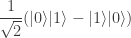 . When the experiment is performed, one particle is always in the
![\displaystyle{C \circ \Gamma[q'] = \Gamma[q]}](https://s0.wp.com/latex.php?latex=%5Cdisplaystyle%7BC+%5Ccirc+%5CGamma%5Bq%27%5D+%3D+%5CGamma%5Bq%5D%7D&bg=ffffff&fg=333333&s=0&c=20201002)

![\displaystyle{L' \circ \Gamma[q'] = L \circ C \circ \Gamma[q'] = L \circ \Gamma[q]}](https://s0.wp.com/latex.php?latex=%5Cdisplaystyle%7BL%27+%5Ccirc+%5CGamma%5Bq%27%5D+%3D+L+%5Ccirc+C+%5Ccirc+%5CGamma%5Bq%27%5D+%3D+L+%5Ccirc+%5CGamma%5Bq%5D%7D&bg=ffffff&fg=333333&s=0&c=20201002)
![\displaystyle{ \begin{aligned} &\partial_2 L \circ \Gamma[q] \\ &= \frac{\partial}{\partial v} L(t, x, v) \\ &= \frac{\partial}{\partial v} L'(t, x', v') \\ &= \frac{\partial}{\partial x'} L'(t, x', v') \frac{\partial x'}{\partial v} + \frac{\partial}{\partial v'} L'(t, x', v') \frac{\partial v'}{\partial v} \\ \end{aligned}}](https://s0.wp.com/latex.php?latex=%5Cdisplaystyle%7B+%5Cbegin%7Baligned%7D+++%26%5Cpartial_2+L+%5Ccirc+%5CGamma%5Bq%5D+%5C%5C++%26%3D+%5Cfrac%7B%5Cpartial%7D%7B%5Cpartial+v%7D+L%28t%2C+x%2C+v%29+%5C%5C+++%26%3D+%5Cfrac%7B%5Cpartial%7D%7B%5Cpartial+v%7D+L%27%28t%2C+x%27%2C+v%27%29+%5C%5C+++%26%3D+%5Cfrac%7B%5Cpartial%7D%7B%5Cpartial+x%27%7D+L%27%28t%2C+x%27%2C+v%27%29+%5Cfrac%7B%5Cpartial+x%27%7D%7B%5Cpartial+v%7D+%2B+%5Cfrac%7B%5Cpartial%7D%7B%5Cpartial+v%27%7D+L%27%28t%2C+x%27%2C+v%27%29+%5Cfrac%7B%5Cpartial+v%27%7D%7B%5Cpartial+v%7D+%5C%5C+++%5Cend%7Baligned%7D%7D&bg=ffffff&fg=333333&s=0&c=20201002)
 . Similarly, if we consider the coordinate transformation
  has no explicitly dependent on
  . So
. So
![\displaystyle{ \begin{aligned} &\partial_2 L \circ \Gamma[q] \\ &= \frac{\partial}{\partial v'} L'(t, x', v') \frac{\partial v'}{\partial v} \\ \end{aligned}}](https://s0.wp.com/latex.php?latex=%5Cdisplaystyle%7B+%5Cbegin%7Baligned%7D+++%26%5Cpartial_2+L+%5Ccirc+%5CGamma%5Bq%5D+%5C%5C++%26%3D+%5Cfrac%7B%5Cpartial%7D%7B%5Cpartial+v%27%7D+L%27%28t%2C+x%27%2C+v%27%29+%5Cfrac%7B%5Cpartial+v%27%7D%7B%5Cpartial+v%7D+%5C%5C+++%5Cend%7Baligned%7D%7D&bg=ffffff&fg=333333&s=0&c=20201002)


 .
. .
.![\displaystyle{ \begin{aligned} (\mathbf{A}^\mathrm{T})^{-1} &= (\mathbf{A}^{-1})^\mathrm{T} \\ L^T \eta L &= \eta \\ \eta &= [L^T]^{-1} \eta L^{-1} \\ [L^T]^{-1} \eta L^{-1} &= \eta \\ [L^{-1}]^T \eta L^{-1} &= \eta \\ \end{aligned}}](https://s0.wp.com/latex.php?latex=%5Cdisplaystyle%7B+++%5Cbegin%7Baligned%7D+++%28%5Cmathbf%7BA%7D%5E%5Cmathrm%7BT%7D%29%5E%7B-1%7D+%26%3D+%28%5Cmathbf%7BA%7D%5E%7B-1%7D%29%5E%5Cmathrm%7BT%7D+%5C%5C++L%5ET+%5Ceta+L+%26%3D+%5Ceta+%5C%5C++%5Ceta+%26%3D+%5BL%5ET%5D%5E%7B-1%7D+%5Ceta+L%5E%7B-1%7D+%5C%5C++%5BL%5ET%5D%5E%7B-1%7D+%5Ceta+L%5E%7B-1%7D+%26%3D+%5Ceta+%5C%5C++%5BL%5E%7B-1%7D%5D%5ET+%5Ceta+L%5E%7B-1%7D+%26%3D+%5Ceta+%5C%5C++%5Cend%7Baligned%7D%7D&bg=ffffff&fg=333333&s=0&c=20201002)

 Physics Town
You must be logged in to post a comment.